Cleaning Schedules and Logbooks: What UK Food Law Requires
Cleaning records are essential evidence for food hygiene inspections. Here's what UK food safety law requires, how often records must be completed, and what a 5-star rating demands.
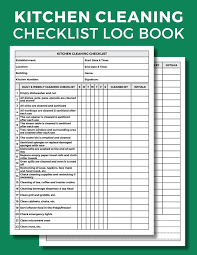
Every food business in the UK must maintain a cleaning schedule logbook food business uk operators can use to demonstrate compliance with hygiene regulations. These records serve as documented proof that your premises, equipment, and surfaces are cleaned properly and regularly — evidence that environmental health officers will specifically request during inspections. Without adequate cleaning records, achieving a high food hygiene rating becomes significantly more difficult, regardless of how clean your kitchen actually appears on the day.
The Legal Basis for Cleaning Records in UK Food Businesses
UK food hygiene law derives primarily from Regulation (EC) No 852/2004, which was retained in domestic law following Brexit. Article 4 and Annex II of this regulation require food business operators to maintain appropriate conditions to prevent contamination, while Article 5 mandates the implementation of food safety management systems based on HACCP principles.
The Food Safety and Hygiene (England) Regulations 2013 (with equivalent legislation in Scotland, Wales, and Northern Ireland) enforces these requirements domestically. Environmental health officers operating under this framework have the authority to inspect records, issue improvement notices, and in serious cases, close premises where cleaning standards pose a risk to public health.
Crucially, the law requires not just that cleaning happens, but that you can prove it happens. Verbal assurances carry no weight during inspections. A well-maintained cleaning schedule logbook provides the contemporaneous documentary evidence that demonstrates ongoing compliance rather than a hastily tidied kitchen prepared for an announced visit.
What Must Be Included in a Cleaning Schedule
A compliant cleaning schedule must address four fundamental questions for every item, area, and piece of equipment in your food business: what is being cleaned, how it should be cleaned, when cleaning should occur, and who is responsible for completing the task.
The schedule should cover all food contact surfaces, including preparation tables, chopping boards, utensils, and equipment such as slicers, mixers, and food processors. Non-food contact surfaces also require attention — walls, floors, storage areas, waste bins, door handles, and light switches all harbour bacteria and require regular cleaning.
Each entry should specify the cleaning method and chemicals to be used. Environmental health officers pay particular attention to whether staff understand dilution rates for sanitisers and whether the contact time is sufficient for the product to be effective. Many cleaning chemicals require surfaces to remain wet for a specific period to achieve adequate disinfection.
Frequency requirements vary by item. Food contact surfaces typically require cleaning after each use or at minimum several times daily. Floors might need sweeping throughout service with a thorough clean at close. Deep cleaning of extraction systems, behind equipment, and storage areas occurs weekly or monthly. Your schedule must reflect these different frequencies clearly.
How Often Must Cleaning Records Be Completed
The short answer is that records must be completed at the time cleaning occurs. Retrospective completion — filling in a week's worth of records before an inspection — is both ineffective and easily detected by experienced officers.
Daily cleaning tasks require daily signatures or initials from the person who completed them. If your schedule shows that food preparation surfaces must be sanitised before service, after lunch, and at close of business, then three separate sign-offs should appear for each day. Weekly tasks need weekly entries, monthly tasks need monthly confirmation.
The Food Standards Agency's Safer Food Better Business pack, widely used by smaller food businesses, includes diary sheets designed for daily completion. These records should be retained for a minimum of three months, though many businesses keep them for twelve months to demonstrate consistent long-term compliance.
For businesses implementing more comprehensive HACCP-based systems, cleaning verification may form part of broader food safety monitoring records that include temperature checks, supplier records, and staff training documentation. The key principle remains constant: contemporaneous recording at the point of completion.
The Link Between Cleaning Records and Food Hygiene Ratings
The Food Hygiene Rating Scheme assesses businesses across three categories: hygienic food handling, cleanliness and condition of facilities and building, and management of food safety. Cleaning records directly impact at least two of these categories.
Under the "cleanliness and condition" category, officers evaluate the physical cleanliness of your premises. However, a single snapshot on inspection day tells only part of the story. Your cleaning logbook demonstrates whether current standards are maintained consistently or represent an atypical effort made in anticipation of the visit.
The "management of food safety" category carries significant weight in determining your overall score. Officers assess whether your documented procedures are actually being followed. A beautiful laminated cleaning schedule mounted on the wall means nothing if the accompanying logbook sits empty or contains obviously fabricated entries.
Businesses achieving consistent 5-star ratings typically maintain detailed cleaning records that officers can examine for any date within the retention period. Random sampling of historical records — checking whether the records for a Tuesday six weeks ago are complete — is a common inspection technique.
Common Failures That Result in Low Scores
Environmental health officers encounter the same problems repeatedly. Understanding these common failures helps you avoid them in your own business.
Incomplete records represent the most frequent issue. Schedules exist but logbooks contain gaps — missed days, blank sections, or entire weeks without entries. Officers interpret missing records as evidence that cleaning did not occur, regardless of your protestations otherwise.
Generic schedules that fail to reflect your actual operation cause problems. A template downloaded from the internet might list equipment you don't have while omitting items specific to your business. Your schedule must be tailored to your premises, your equipment, and your operational procedures.
Lack of staff awareness undermines even well-designed systems. If your cleaning operative cannot explain the schedule during inspection, cannot identify which chemicals are used for which purposes, or seems unfamiliar with the documented procedures, officers reasonably question whether the system functions in practice.
Poor condition of cleaning materials themselves raises concerns. Dirty cloths, unlabelled spray bottles, chemical containers with illegible or missing labels, and worn-out equipment suggest that cleaning practices fall short of documented standards.
Creating an Effective Cleaning Schedule Logbook
Start by conducting a thorough audit of your premises. Walk through every area — kitchen, storage, front of house, toilets, external waste areas — and list every surface, fixture, and piece of equipment requiring cleaning. Categorise items by location and by cleaning frequency.
Design your schedule in a format that staff will actually use. Overly complicated documents with tiny fonts and excessive detail become off-putting and tend to be ignored. Clear, legible layouts with adequate space for signatures encourage compliance. Many successful businesses use colour-coding to distinguish daily, weekly, and monthly tasks.
Your logbook should accompany the schedule. This might be a simple paper-based system with dated sheets for staff signatures, or increasingly, digital solutions that timestamp entries automatically. Whatever format you choose, ensure it captures who completed each task and when.
Train all staff who have cleaning responsibilities. They should understand not just what to clean but why cleaning matters, how cross-contamination occurs, and the correct use of cleaning chemicals. Staff training records documenting this instruction further strengthen your compliance evidence.
Verification and Supervision of Cleaning
Signing a logbook confirms that a task was completed — it does not confirm that it was completed properly. Effective cleaning management requires supervisory verification alongside staff self-recording.
Managers or supervisors should conduct regular spot-checks of cleaning standards. These checks might be daily for critical areas or weekly for lower-risk zones. Results should be documented, creating a secondary layer of evidence that standards are actively monitored rather than simply assumed.
Some businesses use ATP testing to verify surface cleanliness objectively. These devices detect organic residue invisible to the naked eye, providing scientific confirmation that cleaning has been effective. While not legally required, ATP testing records significantly strengthen your documented food safety management system.
Corrective action is essential when verification reveals problems. If a spot-check identifies inadequate cleaning, the logbook should record both the finding and the remedial action taken. This demonstrates active management rather than passive record-keeping.
Maintaining Records for Inspection
Your cleaning records should be organised, accessible, and protected from damage. Officers should not have to search through piles of paperwork to locate the information they need.
Keep current logbooks in a designated location known to all staff. Archived records from previous months should be stored systematically, labelled by date, and retrievable within minutes. Some businesses maintain digital backups of paper records as additional protection against loss or damage.
Integrate cleaning records with your broader food safety documentation system. Temperature logs, supplier records, training certificates, and cleaning logbooks together demonstrate comprehensive food safety management. Presenting these as a coherent system rather than disconnected documents creates a stronger impression during inspection.
Regular review of your cleaning schedule ensures it remains current. New equipment, menu changes, or operational adjustments may require schedule updates. Dated revision history on your cleaning schedule demonstrates active management of your food safety systems.
Frequently Asked Questions
Do I legally need a written cleaning schedule?
Yes. UK food hygiene regulations require documented procedures as part of your food safety management system. While the regulations don't prescribe a specific format, environmental health officers expect to see written schedules appropriate to your business size and complexity, along with records proving the schedule is followed.
How long must I keep cleaning records?
The Food Standards Agency recommends retaining records for at least three months. However, many local authorities advise keeping records for twelve months. Longer retention periods allow you to demonstrate sustained compliance and protect you if questions arise about historical standards.
Can I use digital cleaning records instead of paper logbooks?
Absolutely. Digital record-keeping is increasingly common and offers advantages including automatic timestamping, reduced risk of loss, and easier organisation. Ensure your digital system is accessible during inspections — officers cannot wait while you attempt to recover files from cloud storage.
What happens if my cleaning records are incomplete during an inspection?
Incomplete records will negatively impact your food hygiene rating, particularly under the "management of food safety" category. Depending on severity, you might receive verbal advice, a written warning, or an improvement notice requiring documented corrective action within a specified timeframe.
Do temporary food businesses at events need cleaning schedules?
Yes. All food businesses require appropriate food safety management documentation, including cleaning procedures. For temporary or mobile operations, simplified systems may be acceptable, but cleaning schedules and records remain mandatory requirements.
Key Takeaways
- UK food law requires documented cleaning procedures and contemporaneous records proving compliance — not just clean premises, but proof that cleaning occurs systematically.
- Your cleaning schedule must address what is cleaned, how, when, and by whom, covering all food contact surfaces, equipment, and premises areas.
- Records must be completed at the time of cleaning, not retrospectively. Daily tasks need daily entries signed by the person who completed them.
- Food hygiene ratings depend significantly on cleaning documentation — officers assess whether your documented systems actually function in practice.
- Retain cleaning records for a minimum of three months, though twelve months provides stronger evidence of sustained compliance.
- Regular supervisory verification and spot-checks, documented alongside staff self-recording, demonstrate active management of cleaning standards.