Electrical Minor Works Certificates: When You Need One and What It Must Contain
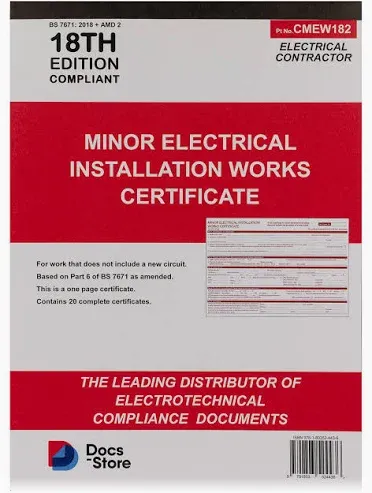
An Electrical Minor Works Certificate is a legal document that must be issued whenever certain types of minor electrical work are carried out on an existing electrical installation in the UK. Despite its name suggesting something straightforward, the requirement to issue this certificate — and to retain it — is a genuine legal obligation under the Building Regulations 2010 and associated legislation. Failing to obtain one when required can create significant problems when selling a property or making an insurance claim.
What Is an Electrical Minor Works Certificate?
An Electrical Minor Works Certificate — formally known as a Minor Electrical Installation Works Certificate — is a document completed by the electrician who carries out minor additions or alterations to an existing electrical installation. It certifies that the work has been designed, constructed, inspected, and tested in accordance with BS 7671, the IET Wiring Regulations.
It is distinct from an Electrical Installation Certificate, which is issued for new installations or major works, and from an EICR, which records the condition of an existing installation. A Minor Works Certificate specifically covers additions or alterations to an existing circuit — it does not cover the creation of new circuits.
When Is a Minor Works Certificate Required?
A Minor Works Certificate is required for additions or alterations to existing circuits, provided the work does not involve creating a new circuit. Examples of work requiring a Minor Works Certificate include adding a socket outlet or light fitting to an existing circuit, replacing a consumer unit, adding a fused spur from an existing circuit, replacing a damaged length of cable, and installing additional switches or control gear on an existing circuit.
Work that creates a new circuit requires a full Electrical Installation Certificate rather than a Minor Works Certificate. Work that is notifiable under Part P of the Building Regulations — which includes most new circuits and work in special locations such as bathrooms — must also be notified to the local authority building control, either through a registered competent person scheme or through a formal building control application.
What Must the Certificate Contain?
A Minor Works Certificate must contain a description of the work carried out, including its extent and location. It must record the details of the circuit to which the additions or alterations have been made, and confirm that the existing installation was inspected and found adequate for the additional load or modification. It must include the results of any tests carried out — earth fault loop impedance, polarity, and RCD operation where relevant — and confirm that the work complies with BS 7671. It must be signed and dated by the electrician who carried out the work, and include their name, company name, and qualifications.
The model form for a Minor Works Certificate is published in BS 7671 and Guidance Note 3 from the IET. Most electricians use pre-printed pads or digital systems based on the model form. Provided all required information is included, the precise format is flexible.
Who Can Issue a Minor Works Certificate?
A Minor Works Certificate can only be issued by a competent person — a qualified electrician with appropriate knowledge, training, and experience in electrical installation work. For work notifiable under Part P of the Building Regulations, the electrician must be registered with a government-approved competent person scheme such as NICEIC, NAPIT, or ELECSA. Registration with such a scheme means the electrician can self-certify their work without a separate building control application.
How Long Must Minor Works Certificates Be Kept?
Minor Works Certificates should be retained for the lifetime of the property. They form part of the electrical installation history of a building and should be kept alongside EICRs, Electrical Installation Certificates, and other electrical documentation.
When a property is sold, the buyer's solicitor will typically request evidence of electrical work carried out, including Minor Works Certificates. The absence of documentation for notifiable work can delay or complicate a property transaction and may require retrospective building control approval.
For rental properties, Minor Works Certificates for work carried out during a tenancy should be retained by the landlord and made available to tenants or local authorities on request.
Frequently Asked Questions
Can a homeowner carry out electrical work and issue their own Minor Works Certificate? No. A Minor Works Certificate must be issued by a competent person — a qualified electrician. Homeowners can carry out certain minor electrical work themselves under the Building Regulations, but they cannot self-certify by issuing their own certificates. Non-notifiable work carried out by homeowners does not require a certificate, but notifiable work must be carried out by a registered electrician or notified to building control.
What is the difference between a Minor Works Certificate and an Electrical Installation Certificate? A Minor Works Certificate covers additions or alterations to an existing circuit. An Electrical Installation Certificate covers new installations, new circuits, or major alterations. The choice of which certificate applies depends on the nature and extent of the work carried out.
What happens if electrical work was carried out without a certificate? For notifiable work carried out without certification, retrospective building control approval may be required. This typically involves an inspection of the work and may require some work to be exposed for inspection. The cost and inconvenience of retrospective approval is significantly greater than obtaining proper certification at the time of the work.
Key Takeaways
- A Minor Works Certificate is required for additions or alterations to existing electrical circuits — it does not cover new circuit installations.
- It must contain a description of the work, circuit details, test results, and the electrician's qualifications and signature.
- Only a qualified and competent electrician can issue a Minor Works Certificate — homeowners cannot self-certify.
- For notifiable work, the electrician must be registered with an approved competent person scheme such as NICEIC or NAPIT.
- Certificates should be retained for the lifetime of the property and made available on sale or to local authorities on request.
- Missing certificates for notifiable work can delay property sales and may require expensive retrospective building control approval.