Electrical Records for Landlords: What UK Law Requires
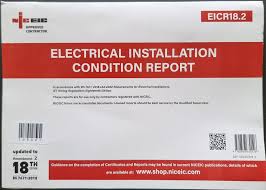
Electrical logbooks for landlords are not a single document but a suite of records that together demonstrate compliance with multiple legal obligations. The regulatory landscape for landlord electrical safety has changed significantly in recent years, and the record-keeping requirements have become correspondingly more demanding. This guide explains exactly what electrical records UK landlords must maintain, for how long, and what the consequences of non-compliance are.
The Electrical Safety Standards Regulations 2020
The Electrical Safety Standards in the Private Rented Sector (England) Regulations 2020 came into force for new tenancies on 1 July 2020 and for existing tenancies on 1 April 2021. They represent the most significant change to landlord electrical safety obligations in England for decades.
Under these regulations, landlords must ensure that the electrical installations in their residential rental properties are inspected and tested at intervals of no more than five years by a qualified and competent person. They must obtain an EICR following each inspection and testing. They must supply a copy of the EICR to each existing tenant within 28 days of the inspection, to any new tenant before they occupy the premises, to any prospective tenant within 28 days of a request, and to the local housing authority within seven days of a request.
If the EICR identifies remedial work as necessary, landlords must carry out that work within 28 days — or the shorter period specified in the report — and supply written confirmation that the work has been carried out to the tenant and to the local housing authority within 28 days of completion.
Records Landlords Must Maintain
The records a landlord should maintain for each rental property fall into several categories. The EICR itself is the primary document — landlords should retain every EICR obtained for a property, not just the most recent. Previous EICRs provide a history of the installation's condition and may be relevant if a historical incident or claim arises.
Remedial work records are equally important. Where an EICR has identified deficiencies, the landlord must arrange remedial work and retain records of what was done, when, and by whom. An Electrical Installation Certificate or Minor Works Certificate will typically be issued following remedial work and should be retained alongside the EICR to which it relates.
Records of when EICRs were provided to tenants — ideally email confirmations or signed receipts — provide evidence of compliance with the obligation to supply the report. These become important if a tenant or local authority later claims the report was not provided.
For furnished tenancies, records of PAT testing of landlord-supplied appliances should be maintained. While not legally mandated in the same way as EICRs for fixed wiring, the obligation to provide safe appliances under the Landlord and Tenant Act 1985 effectively requires a regular inspection and testing regime.
HMO-Specific Requirements
Houses in Multiple Occupation are subject to additional licensing conditions imposed by local authorities. These commonly include requirements for electrical inspections at five-year intervals — which align with the general Electrical Safety Standards Regulations — and may include additional requirements for PAT testing of landlord-supplied appliances, typically annually.
HMO licence conditions should be reviewed carefully — they vary between local authorities and may impose requirements beyond those in the Electrical Safety Standards Regulations. Non-compliance with HMO licence conditions can result in licence revocation and prosecution.
Penalties for Non-Compliance
Local authorities have significant enforcement powers under the Electrical Safety Standards Regulations. They can serve remedial notices requiring landlords to arrange inspections or carry out remedial work within specified timeframes. They can carry out the work themselves and recover the cost from the landlord if a remedial notice is not complied with. They can impose civil penalties of up to £30,000 for breaches of the regulations.
Non-compliance can also affect a landlord's ability to serve a valid Section 21 notice to end a tenancy, and may be relevant to insurance claims following electrical incidents.
Frequently Asked Questions
Do the Electrical Safety Standards Regulations apply in Scotland and Wales? The 2020 Regulations apply in England only. Scotland has its own requirements under the Housing (Scotland) Act 2006 and associated regulations. Wales introduced its own electrical safety requirements for rental properties under the Renting Homes (Wales) Act 2016, which came fully into force in December 2022.
Must landlords provide EICRs to tenants even if the report is satisfactory? Yes. The obligation to provide the EICR to tenants applies regardless of whether the report is satisfactory or unsatisfactory. All tenants are entitled to see the report for their property.
What qualifications must the inspector have? The inspector must be a qualified electrician who is a member of a competent person scheme. The scheme must cover the inspection and testing of electrical installations in the type of premises being inspected. NICEIC, NAPIT, and ELECSA are among the approved schemes.
Key Takeaways
- The Electrical Safety Standards Regulations 2020 require EICRs for all privately rented residential properties in England at intervals not exceeding five years.
- EICRs must be provided to tenants within 28 days of inspection, to new tenants before occupation, and to local authorities within seven days of request.
- Remedial work identified in an unsatisfactory EICR must be completed within 28 days and confirmed in writing to both the tenant and the local housing authority.
- All EICRs, remedial work records, and evidence of provision to tenants should be retained for the duration of ownership of the property.
- HMO licence conditions may impose additional requirements beyond those in the Electrical Safety Standards Regulations.
- Civil penalties of up to £30,000 apply for non-compliance with the Electrical Safety Standards Regulations.