Emergency Lighting Logbooks: Legal Requirements in the UK
Emergency lighting must be tested monthly and annually — and every test must be logged. Here's exactly what UK law requires and how to maintain compliant records.
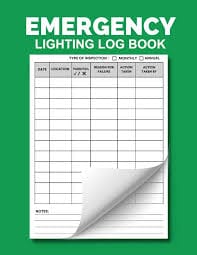
Emergency lighting is a critical life safety system in any building, designed to illuminate escape routes and high-risk areas when the mains power fails. Yet having the system installed is only half the legal obligation — UK law also requires building owners and responsible persons to maintain comprehensive records proving that testing and maintenance have been carried out to the correct standards. Understanding the emergency lighting logbook UK legal requirements is essential for anyone responsible for workplace fire safety, whether you manage a small office, a large commercial premises, or a residential block.
Failure to maintain proper emergency lighting records can result in enforcement action, prosecution, and significant fines. More importantly, inadequate documentation could mean your emergency lighting fails when people's lives depend on it. This guide explains exactly what the law requires, what tests must be recorded, and how to maintain a logbook that will satisfy fire safety inspectors.
Why Emergency Lighting Logbooks Are a Legal Requirement
The legal framework for emergency lighting in England and Wales stems primarily from the Regulatory Reform (Fire Safety) Order 2005, commonly known as the RRO or Fire Safety Order. In Scotland, the Fire (Scotland) Act 2005 and associated regulations apply similar requirements. These laws place a duty on the "responsible person" — typically the employer, building owner, or managing agent — to ensure that fire safety provisions, including emergency lighting, are properly maintained.
Article 17 of the Fire Safety Order specifically requires that fire safety equipment is maintained in an efficient state, in efficient working order, and in good repair. Crucially, the law also requires that records are kept demonstrating compliance. This is where the emergency lighting logbook becomes not just good practice, but a legal necessity.
The British Standard BS 5266-1:2016 provides the technical specification for emergency lighting systems, including detailed requirements for testing frequencies and record keeping. While British Standards themselves are not law, they represent the accepted standard of reasonable practice. Fire safety inspectors will expect compliance with BS 5266-1, and deviation from its requirements would be difficult to justify in any enforcement proceedings.
What the Fire Safety Order Requires
The Regulatory Reform (Fire Safety) Order 2005 does not prescribe a specific format for emergency lighting records, but it does establish clear expectations. The responsible person must be able to demonstrate that emergency lighting is maintained in working order and that a suitable system of maintenance exists. In practice, this means keeping written records of all inspections, tests, and maintenance activities.
Fire safety inspectors conducting audits will ask to see your emergency lighting logbook as standard practice. They will check that testing has been carried out at the required intervals, that faults have been identified and rectified promptly, and that annual certification has been completed by a competent person. The absence of proper records is often treated as seriously as the absence of a working system — you cannot prove compliance without documentation.
Under the Fire Safety Act 2021, which amended the original Fire Safety Order, fire authorities now have enhanced powers to take action against responsible persons who fail to meet their obligations. Penalties for fire safety breaches have increased significantly, with unlimited fines possible for serious offences. Maintaining comprehensive logbook records has never been more important.
Required Testing Frequencies Under BS 5266-1
British Standard BS 5266-1:2016 sets out a clear schedule of testing that must be followed and documented. The standard specifies three distinct types of test, each with different frequencies and purposes.
Daily visual checks should be made to ensure that all luminaires and exit signs are present, undamaged, and showing their charge indicator lights where fitted. While recording every daily check in the logbook may be impractical, any defects discovered should be logged immediately along with the action taken.
Monthly function tests are mandatory and must be recorded. Each luminaire must be tested briefly — typically by simulating a mains failure for a period long enough to confirm the light operates on battery power. The standard suggests a minimum duration sufficient to check function, usually interpreted as a few seconds to one minute. Monthly tests must be logged with the date, the person conducting the test, and any defects found.
Annual full-duration tests are the most comprehensive requirement. Every emergency luminaire must be tested for its full rated duration — typically three hours for most commercial premises. This test verifies that batteries can sustain illumination for the entire period required during an emergency evacuation. The annual test must be carried out by a competent person, and a detailed record including all luminaire locations, their performance, and any remedial work required must be documented in the logbook.
What Information Must Be Recorded
A compliant emergency lighting logbook should contain specific information for every test and maintenance activity. For monthly function tests, records should include the date of the test, the name or signature of the person conducting it, confirmation that all luminaires operated correctly, details of any luminaires that failed or showed reduced output, and the remedial action taken for any faults.
For annual full-duration tests, more comprehensive records are required. The logbook should document the date and start time of the test, the duration achieved, a schedule or plan identifying every luminaire in the system, individual results for each luminaire showing whether it passed or failed, battery condition assessments, details of any lamps replaced or repairs carried out, and the name and qualifications of the person conducting the test.
The logbook should also maintain a record of the system's design specifications, including the type of system installed, the rated duration, and a plan showing luminaire locations. Any modifications to the building layout or the emergency lighting system itself should be recorded, as changes may affect compliance with escape route illumination requirements.
Maintaining a proper fire safety logbook alongside your emergency lighting records ensures you have a complete picture of your building's safety compliance status.
Who Can Conduct Testing and Sign Off Records
The question of competence is central to emergency lighting compliance. Monthly function tests can generally be conducted by trained in-house staff, provided they understand what they are checking and can identify faults. The responsible person should ensure anyone conducting monthly tests has received appropriate instruction in the operation of the specific system installed.
Annual full-duration tests and servicing should be carried out by a competent person with appropriate technical knowledge. This typically means an electrical contractor or specialist emergency lighting service provider who understands BS 5266-1 requirements and can properly assess battery condition, light output, and system integrity. Many organisations choose to have annual testing conducted by an external contractor who can provide independent certification.
The competent person conducting annual tests should provide a completion certificate or report that can be kept with the logbook. This certificate should confirm the date of the test, the standard to which testing was carried out, the overall system condition, and any recommendations for remedial work. Keeping these certificates alongside your regular test records creates a comprehensive compliance file.
Common Compliance Failures and How to Avoid Them
Fire safety inspectors frequently identify the same problems when reviewing emergency lighting records. Understanding these common failures can help you avoid them.
Gaps in monthly testing records are among the most frequent issues. Missing months suggest either that tests were not conducted or that record keeping has been neglected — neither of which inspires confidence. Setting up a calendar reminder system and assigning clear responsibility for monthly tests helps ensure consistency.
Incomplete fault records are another common problem. Logging that a fault was found without recording the subsequent repair, or failing to note when replacement parts were fitted, leaves the compliance picture unclear. Every fault entry should have a corresponding resolution entry showing when and how the problem was fixed.
Failure to conduct annual full-duration tests is a serious compliance gap. Some responsible persons mistakenly believe monthly tests are sufficient, but the annual three-hour test is essential for verifying battery capacity. Batteries degrade over time, and only a full-duration test reveals whether they can still support the required emergency illumination period.
Poor luminaire identification makes it impossible to track individual unit performance over time. Each luminaire should have a unique reference number corresponding to a location plan, allowing test results to be recorded consistently and fault histories to be tracked.
Choosing the Right Logbook Format
Emergency lighting logbooks are available in various formats, from simple paper-based books to sophisticated digital systems. The right choice depends on the size and complexity of your premises and your broader fire safety management arrangements.
Paper logbooks remain widely used and are perfectly acceptable for compliance purposes. A good paper logbook will include pre-formatted pages for monthly and annual tests, space for recording faults and remedial actions, a section for system specifications and location plans, and storage for certificates and reports from external contractors.
Digital logbook systems offer advantages for larger organisations or those managing multiple sites. Electronic records can include automatic date stamping, reminder notifications for upcoming tests, centralised storage accessible to multiple users, and easy generation of compliance reports. However, digital systems must be backed up regularly and remain accessible for inspection.
Whatever format you choose, the logbook must be kept on the premises and readily available for inspection by fire safety officers. If you use a digital system, you should be able to produce printed reports promptly when requested.
Integration with Wider Fire Safety Records
Emergency lighting is just one component of a building's fire safety provisions. Your emergency lighting logbook should form part of a comprehensive fire safety record system that also covers fire alarm testing, firefighting equipment inspections, fire door checks, and fire risk assessment reviews.
Many responsible persons find it helpful to use an integrated fire safety logbook system that brings all these records together in a single location. This makes it easier to maintain an overview of compliance across all fire safety elements and ensures nothing falls through the gaps.
When your fire risk assessment is reviewed — which should happen regularly and whenever significant changes occur — the assessor will want to see your emergency lighting records as part of evaluating overall fire safety management. Well-maintained logbooks demonstrate a systematic approach to fire safety that goes beyond mere box-ticking.
Frequently Asked Questions
How long must emergency lighting test records be kept?
There is no specific statutory retention period for emergency lighting records. However, best practice is to retain records for at least five years, and many organisations keep them indefinitely. Records may be needed to demonstrate historical compliance in the event of an investigation following a fire incident, so longer retention is advisable.
Can I conduct the annual full-duration test myself?
While there is no legal prohibition on the responsible person conducting annual tests, BS 5266-1 requires testing by a "competent person" with sufficient knowledge and experience. Unless you have appropriate electrical qualifications and specific training in emergency lighting systems, annual testing should be entrusted to a specialist contractor who can provide proper certification.
What happens if my emergency lighting fails during the annual test?
Any luminaire that fails to operate for the full rated duration must be repaired or replaced promptly. The fault and the remedial action should be recorded in the logbook. The system should be retested after repairs to confirm compliance. Until repairs are completed, you may need to implement temporary measures such as torches or additional supervision during darkness.
Do I need separate logbooks for emergency lighting and fire alarms?
Separate logbooks are not legally required, and many combined fire safety logbooks include sections for both emergency lighting and fire alarm records. The important point is that all required information is recorded clearly and can be readily located during an inspection. Some organisations prefer separate logbooks for clarity, particularly in larger premises.
What if my building has automatic self-testing emergency lighting?
Self-testing systems can reduce the manual testing burden but do not eliminate record-keeping requirements. You must still maintain records showing the system is monitoring itself correctly, including downloading and retaining self-test reports. Annual verification by a competent person remains necessary to confirm the self-testing function is operating properly and that the system meets BS 5266-1 requirements.
Key Takeaways
- The Regulatory Reform (Fire Safety) Order 2005 requires the responsible person to maintain emergency lighting in working order and keep records proving compliance — making logbooks a legal necessity, not optional good practice.
- BS 5266-1:2016 specifies monthly function tests and annual full-duration tests (typically three hours), all of which must be documented with dates, test results, faults found, and remedial actions taken.
- Monthly tests can be conducted by trained in-house staff, but annual full-duration tests should be carried out by a competent person, typically an external contractor who can provide certification.
- Logbooks must be kept on premises and available for inspection by fire safety officers, who will check for consistent testing schedules, complete fault records, and evidence of prompt repairs.
- Penalties for fire safety breaches have increased under the Fire Safety Act 2021, with unlimited fines possible for serious offences — proper documentation is your primary defence against enforcement action.
- Emergency lighting records should form part of an integrated fire safety management system covering all life safety provisions in the building.