How to Keep a Fire Risk Assessment Record: UK Guide
A fire risk assessment must be recorded in writing for most UK premises. Here's what it must contain, how long to keep it, and who is responsible.
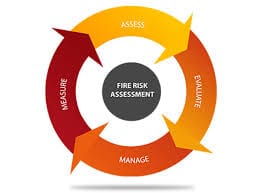
If you're responsible for fire safety in a UK workplace, residential building, or commercial premises, fire risk assessment record keeping UK regulations require you to document your findings properly. This isn't simply good practice — for most premises, it's a legal requirement under the Regulatory Reform (Fire Safety) Order 2005. A properly maintained fire risk assessment record demonstrates compliance, protects building occupants, and could prove essential if the fire service ever inspects your premises or if there's an incident requiring investigation.
Who Must Keep a Written Fire Risk Assessment?
The law requires a written fire risk assessment in specific circumstances. If your premises employs five or more people, you must record your fire risk assessment in writing. This applies regardless of whether those employees work simultaneously or across different shifts. The requirement also extends to premises with a licence in force, such as those licensed for entertainment or alcohol sales, and any premises where an alterations notice has been served requiring fire authority approval before making changes.
Even if you're not legally obligated to keep written records — perhaps you run a small business with fewer than five employees — doing so remains strongly advisable. A written assessment provides evidence of your compliance efforts, helps you track changes over time, and ensures anyone taking over fire safety responsibilities has the information they need. The fire service and insurers will look favourably on documented assessments regardless of your legal obligations.
What Your Fire Risk Assessment Record Must Contain
A compliant fire risk assessment record must include specific information to satisfy legal requirements and genuinely protect building occupants. At minimum, your documented assessment should contain details of the significant findings from your assessment — the fire hazards you've identified and the people who might be at risk from them.
Your record should clearly identify fire hazards present in the premises. These include sources of ignition such as heating equipment, electrical installations, and cooking facilities. You must also document sources of fuel, which encompasses everything from paper and cardboard to flammable liquids, textiles, and building materials. Oxygen sources beyond normal atmospheric conditions, such as medical oxygen supplies, require documentation too.
The people at risk section must identify everyone who could be affected by a fire in your premises. This means employees, visitors, contractors, members of the public, and anyone else who might be present. Pay particular attention to documenting people who may be especially vulnerable, including those with mobility impairments, sensory impairments, or cognitive difficulties that might affect their response to a fire alarm.
Beyond hazard identification, your record must document the fire safety measures you've implemented. This covers your means of detection and warning, firefighting equipment, escape routes and emergency exits, emergency lighting, signage, and any specific arrangements for people requiring assistance. You should also record your staff training arrangements and fire drill procedures.
Using a Fire Safety Logbook for Ongoing Records
While the fire risk assessment itself captures your initial evaluation and periodic reviews, ongoing compliance requires regular testing, maintenance, and documentation. A fire safety logbook provides a structured system for recording this continuous activity alongside your assessment.
Your logbook should include records of weekly fire alarm tests, monthly emergency lighting checks, and regular inspections of fire doors, extinguishers, and escape routes. It should also document fire drills, staff training sessions, and any maintenance work carried out on fire safety systems. When fire service inspectors visit, they'll typically want to see both your fire risk assessment and your ongoing compliance records.
Keeping these records together in a single, well-organised system makes management straightforward and demonstrates a serious approach to fire safety compliance. Many responsible persons find that combining their fire risk assessment with a comprehensive logbook system reduces administrative burden while improving overall safety standards.
How Often to Review and Update Your Assessment
Your fire risk assessment isn't a one-time document. The law requires you to review it regularly and update it whenever circumstances change significantly. There's no fixed legal timeframe for reviews, but most guidance suggests annual reviews as good practice for typical premises, with more frequent reviews for higher-risk environments.
Certain events should trigger an immediate review regardless of when you last assessed your premises. Any significant changes to the building structure, layout, or use require reassessment. This includes alterations to escape routes, installation of new equipment or processes involving fire hazards, and changes to the number or types of people using the building. If there's been a fire or near miss, or if you've identified that existing fire precautions are inadequate, review immediately.
When reviewing, don't simply confirm previous findings unchanged. Actively look for new hazards, changed circumstances, and whether your existing control measures remain effective. Document the date of each review, what you checked, and any changes made as a result. This creates an audit trail demonstrating ongoing compliance.
Who Can Conduct and Record a Fire Risk Assessment
Under the Fire Safety Order, the "responsible person" holds legal duty for fire safety and ensuring a suitable assessment is conducted. For workplaces, this is typically the employer. For other premises, it may be the owner, occupier, or anyone else with control over the premises through a contract or tenancy.
The responsible person need not conduct the assessment personally but must ensure it's carried out competently. You can perform the assessment yourself if you have sufficient knowledge, experience, and training. For straightforward premises with familiar hazards, self-assessment using government guidance may be appropriate. Complex premises, those with unusual hazards, or situations where you lack confidence in your own expertise warrant engaging a competent fire risk assessor.
Whether you assess yourself or commission an external assessment, the responsible person retains legal accountability. If you use an external assessor, keep copies of their qualifications and professional memberships alongside the assessment itself. Third-party schemes accredited by organisations such as the British Standards Institution or the Institution of Fire Engineers indicate competence.
Record Retention: How Long to Keep Fire Risk Assessments
No specific legal timeframe dictates how long you must retain fire risk assessment records, but practical considerations suggest keeping them for extended periods. Previous assessments demonstrate your compliance history, show how your fire safety management has evolved, and could prove essential in any legal proceedings.
As a general principle, retain fire risk assessments and review records for at least the period during which you're responsible for the premises. Many organisations keep records for a minimum of three to five years after an assessment is superseded, with some retaining them indefinitely in electronic archives where storage costs are negligible.
Consider that civil claims can be brought years after an incident. If someone alleges negligence in your fire safety management, historical records could provide crucial defence evidence. Keeping well-organised archives costs little and could prove invaluable. Ensure records are stored securely, backed up if electronic, and accessible to anyone who might need them for compliance or emergency purposes.
Common Mistakes in Fire Risk Assessment Records
Several recurring errors undermine fire risk assessment documentation. The most frequent is treating the assessment as a paper exercise rather than a practical safety tool. A technically compliant document that sits in a drawer achieving nothing fails its fundamental purpose. Your assessment should drive real safety improvements and be actively referenced when making decisions about the premises.
Insufficient detail renders many assessments inadequate. Recording that "fire hazards were identified and controlled" without specifying what those hazards are and what controls you've implemented provides little practical use and limited legal protection. Be specific: name the hazards, describe the people at risk, and detail your control measures.
Failing to review and update assessments represents another common problem. Premises change, people change, and regulations evolve. An assessment from several years ago may no longer reflect current conditions. Ensure your records show regular reviews, even if those reviews conclude that no changes are needed.
Poor organisation makes records hard to use and difficult to present during inspections. Keep your fire risk assessment, review records, and ongoing compliance documentation in a logical, accessible system. A properly structured logbook can help maintain organisation and ensure nothing falls through the gaps.
Enforcement and Penalties for Non-Compliance
Fire and rescue authorities actively enforce the Fire Safety Order through inspections, audits, and response to complaints. If inspectors find inadequate fire risk assessment documentation, they can issue enforcement notices requiring compliance within specified timeframes. More serious failures may result in prohibition notices preventing use of premises until deficiencies are corrected.
Criminal prosecution remains possible for significant breaches. Individuals found guilty of fire safety offences can face unlimited fines and, in the most serious cases involving risk of death or serious injury, imprisonment for up to two years. Following amendments introduced by the Fire Safety Act 2021, building owners and managers face enhanced responsibilities and scrutiny, particularly for residential buildings.
Beyond legal penalties, inadequate fire safety documentation can affect insurance coverage. Insurers may refuse claims or reduce payouts if you can't demonstrate proper compliance with fire safety legislation. The commercial and reputational consequences of a fire incident where documentation proves inadequate can be severe and long-lasting.
Frequently Asked Questions
Can I keep my fire risk assessment electronically?
Yes, electronic records are perfectly acceptable provided they're secure, backed up, and accessible when needed. Many responsible persons now use digital systems or cloud storage for fire safety documentation. Ensure anyone who might need access during an emergency or inspection can retrieve the records promptly.
Do I need a new fire risk assessment if I move to different premises?
Absolutely. Fire risk assessments are premises-specific. A new assessment must be conducted for any new premises before occupation or as soon as reasonably practicable thereafter. You cannot transfer an assessment from one premises to another, though you may find templates and processes from previous assessments useful starting points.
What if my fire risk assessment identifies problems I can't fix immediately?
Record the identified issues, the interim measures you're taking to manage risk, and your planned timescales for permanent solutions. Prioritise actions based on risk level — high-risk issues need immediate attention while lower-risk matters can be programmed into maintenance schedules. Document your reasoning for prioritisation.
Should I keep records of fire drills with my assessment?
Yes, fire drill records should be maintained alongside your fire risk assessment as part of your overall fire safety documentation. Record the date, time, number of participants, evacuation time achieved, any issues identified, and corrective actions taken. This demonstrates ongoing compliance beyond the assessment itself.
Can fire risk assessment templates help with record keeping?
Templates and structured logbooks can help ensure you cover all necessary elements and maintain consistent records. However, don't simply tick boxes without genuine consideration. Your assessment must reflect your specific premises and circumstances. Generic responses that don't address actual conditions won't satisfy legal requirements or protect people effectively.
Key Takeaways
- Written fire risk assessments are legally required for premises with five or more employees, licensed premises, and those subject to alterations notices.
- Your record must identify fire hazards, people at risk, and the control measures you've implemented, with sufficient detail to be meaningful and actionable.
- Review your assessment regularly — at least annually — and update it whenever significant changes occur to your premises, occupants, or activities.
- Retain fire risk assessment records for extended periods; historical documentation could prove essential in legal proceedings or insurance claims.
- Use a structured fire safety logbook to maintain ongoing compliance records alongside your assessment, creating a comprehensive documentation system.
- Non-compliance can result in enforcement notices, prohibition of premises use, unlimited fines, and potential imprisonment for serious breaches.