How Many Hours Do You Need for a UK Private Pilot Licence?
A UK PPL requires a minimum of 45 hours flight time. Here's exactly how those hours break down, what counts, and how your logbook proves them.
If you're considering learning to fly in the United Kingdom, understanding the PPL hours required UK CAA regulations mandate is essential before you begin your training. The Civil Aviation Authority sets out clear minimum requirements: you'll need at least 45 hours of flight time to qualify for a Private Pilot Licence. However, that headline figure tells only part of the story. How those hours break down, what counts towards your total, and how you must record them in your pilot's logbook are all crucial details that every aspiring pilot needs to understand thoroughly before committing to this significant investment of time and money.
The Official CAA Minimum Hour Requirements
The United Kingdom follows European Union Aviation Safety Agency (EASA) standards for private pilot licensing, even following Brexit. Under these regulations, the minimum flight time required to obtain a PPL(A) — that's a Private Pilot Licence for aeroplanes — stands at 45 hours. This isn't merely a target to aim for; it represents the absolute minimum the CAA will accept when you apply for your licence.
These 45 hours must include specific components that cannot be substituted or shortened. You'll need at least 25 hours of dual instruction, where you fly with a qualified flight instructor who guides your training. Additionally, you must complete a minimum of 10 hours of supervised solo flight time, during which you're the only person in the aircraft and making all the decisions yourself.
Within that solo time, there's a further stipulation: you must complete at least 5 hours of solo cross-country flight time. This means flying between different aerodromes rather than simply practising circuits at your home airfield. One of these cross-country flights must cover at least 150 nautical miles and include full-stop landings at two aerodromes different from your departure point.
Understanding the Breakdown of Training Hours
Your flight training follows a structured syllabus that builds skills progressively. The early hours focus on the effects of controls, straight and level flight, climbing, descending, and turning. Your instructor will demonstrate each exercise before handing control to you for practice.
As you progress, you'll move on to more complex manoeuvres including stalling, spin awareness, and emergency procedures. Circuit flying — taking off, flying a rectangular pattern around the airfield, and landing — forms a substantial part of early training and continues throughout your course as you refine your handling skills.
Navigation training typically begins once you've demonstrated competence in basic handling. You'll learn to plan routes using aviation charts, calculate headings accounting for wind, and navigate using visual references on the ground. Radio navigation and the use of GPS also feature in modern training syllabuses, though visual navigation remains the foundation.
The qualifying cross-country flight of 150 nautical miles represents a significant milestone. Many students find this solo navigation exercise both challenging and rewarding, as it demonstrates genuine competence in planning and executing a flight across unfamiliar territory.
Why Most Students Need More Than 45 Hours
Here's something every prospective pilot should understand clearly: the 45-hour minimum is precisely that — a minimum. The national average for completing PPL training in the United Kingdom sits between 55 and 65 hours. Some students complete their training closer to the minimum, whilst others require 70 hours or more.
Several factors influence how many hours you'll personally need. Flying frequency matters enormously. Students who fly two or three times weekly progress more efficiently than those managing only one flight per fortnight. Skills decay between lessons, and irregular training often means spending time relearning rather than advancing.
Your general aptitude, previous experience with complex coordination tasks, and ability to absorb theoretical knowledge all play roles. Weather cancellations — frustratingly common in British aviation — can disrupt momentum and extend training duration. Your choice of flying school and the consistency of your instructor also affect progress.
When budgeting for training, planning for 55-60 hours provides a more realistic financial framework than assuming you'll achieve the minimum. This approach prevents disappointment and ensures you're not caught short financially just as you're approaching the finish line.
What Counts Towards Your PPL Hours
Not all time spent in an aircraft counts equally towards your licence requirements. Understanding what qualifies helps you track progress accurately in your pilot's logbook and ensures you meet all criteria before applying for your skill test.
Flight time officially begins when an aircraft first moves under its own power for the purpose of flight and ends when it finally comes to rest at the end of the flight. Taxiing to the runway, the takeoff roll, all airborne time, landing, and taxiing back to parking all count. Time spent with the engine running whilst parked does not.
Dual instruction time covers all flights where a qualified instructor occupies a pilot seat and provides training. Solo time means flights where you are the sole occupant of the aircraft. Pilot-in-command time requires you to be the person responsible for the aircraft's operation and safety — during your training, this applies to your solo flights.
If you've completed flight training towards other licences or ratings, some of that time might count towards your PPL. Similarly, time logged in approved flight simulators can contribute towards your total, though strict limits apply. The CAA permits a maximum of 5 hours of flight simulation training devices to count towards the 45-hour requirement, and this comes with specific conditions about the type and approval status of the simulator used.
The Critical Role of Your Pilot's Logbook
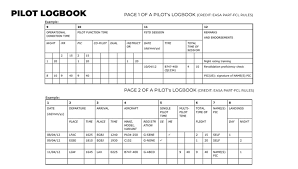
Your pilot's logbook serves as the legal record of your flying experience. Without properly documented hours, you cannot prove you've met the requirements for any licence or rating. The CAA examiner will scrutinise your logbook entries before permitting you to take your skill test, and any discrepancies or incomplete records can delay your progress.
Every flight must be recorded with specific details: the date, aircraft type and registration, departure and arrival locations, flight time broken into categories, and the nature of the flight (whether dual instruction, solo, or later as pilot-in-command with passengers). Your instructor must sign entries for dual flights, confirming the training took place.
Maintaining your logbook meticulously from your very first flight establishes good habits that will serve you throughout your flying career. Pilots must keep their logbooks for life, and these records prove experience for future ratings, licence renewals, and insurance purposes. Many pilots choose to maintain both physical and digital logbook records to protect against loss or damage.
Ground School and Examination Requirements
Flight hours represent only part of PPL training. You must also pass nine theoretical knowledge examinations covering subjects including air law, human performance, meteorology, navigation, operational procedures, flight performance and planning, aircraft general knowledge, communications, and principles of flight.
Most flying schools integrate ground school with flight training, scheduling classroom sessions or providing online learning materials alongside practical flying. Some students prefer to complete ground school before beginning flight training, whilst others study concurrently. There's no single correct approach, though understanding theory often helps flight training make more sense.
You must pass all nine examinations before taking your practical skill test. The examinations can be sat in any order, and you have 18 months from passing your first examination to complete them all. Each examination requires a 75% pass mark, and failed examinations can be retaken after appropriate further study.
The Skill Test: Your Final Assessment
Once you've accumulated the required hours, passed all theoretical examinations, and your instructor believes you're ready, you'll take the PPL skill test with a CAA-approved examiner. This practical assessment typically lasts around two hours and covers all aspects of private pilot operations.
The skill test includes pre-flight preparation, navigation planning, aircraft handling, radio communications, emergency procedures, and general airmanship. The examiner assesses whether you can operate as a safe and competent pilot-in-command, making appropriate decisions throughout the flight.
Most candidates who reach the skill test pass on their first attempt, as instructors generally won't recommend students until they're genuinely ready. However, if you don't pass, you can retake the failed sections after additional training. Your flight school will advise on the specific areas requiring improvement.
Building Hours After Your PPL
Your PPL allows you to fly as pilot-in-command and carry passengers, but it's just the beginning of most pilots' flying journeys. Many pilots continue building hours to pursue additional ratings — instrument ratings for flying in poor visibility, night ratings, multi-engine ratings, or even commercial licences.
Every hour you fly after obtaining your PPL goes into your logbook, building the experience required for future qualifications. Some ratings require minimum total flight times; a commercial pilot licence, for instance, demands at least 200 hours. Starting with strong logbook habits during PPL training establishes the discipline needed for accurate record-keeping throughout your aviation career.
Frequently Asked Questions
Can I start PPL training at any age?
You can begin flying lessons at any age, though you must be at least 16 years old to fly solo and 17 to hold a PPL. Many students begin training before their 16th birthday, building dual hours with an instructor until they're old enough to fly alone. There's no upper age limit for obtaining a PPL, provided you can pass the required Class 2 medical examination.
Do hours from a microlight licence count towards a PPL?
Hours logged on microlight aircraft do not count towards the 45-hour PPL requirement. Microlights fall under a separate licensing system with different rules. However, pilots holding a microlight licence often find their existing skills accelerate PPL training, even though those logged hours don't transfer directly.
How long does it take to complete PPL training?
The calendar time varies enormously depending on flying frequency and weather. A highly motivated student flying three times weekly might complete training in three to four months. More typically, students flying once or twice weekly finish in nine to twelve months. Some take considerably longer due to weather, financial constraints, or personal circumstances.
What happens if my training takes longer than expected?
There's no time limit on PPL training itself, though you must complete all theoretical examinations within 18 months of passing your first one. If your practical training extends significantly, you may need to revisit earlier exercises to ensure skills haven't degraded before progressing further.
Can flight simulator time count towards my PPL hours?
Up to 5 hours of approved flight simulation training device time can count towards your 45-hour requirement. The simulator must be approved for PPL training, and specific rules govern how this time integrates with your overall syllabus. Not all simulators qualify, so check with your flying school before assuming simulator sessions will count.
Key Takeaways
- The CAA requires a minimum of 45 flight hours for a UK PPL, including at least 25 hours dual instruction and 10 hours supervised solo time.
- Most students realistically need 55-65 hours to complete training, so budget accordingly rather than assuming you'll achieve the minimum.
- Your solo cross-country requirement includes one flight of at least 150 nautical miles with landings at two different aerodromes from your departure point.
- Meticulous logbook keeping is essential — your pilot's logbook is the legal proof of your flying experience and will be checked before your skill test.
- Nine theoretical examinations must be passed alongside practical training before you can attempt the skill test with a CAA examiner.
- Flying frequency significantly impacts training duration — regular lessons lead to faster, more efficient progress than infrequent flying.