Working Time Directive and Driver Hours: A Complete UK Guide
The Working Time Directive limits HGV drivers to 48 hours per week on average. Here's how driver hours rules work, what must be logged, and the penalties for non-compliance.
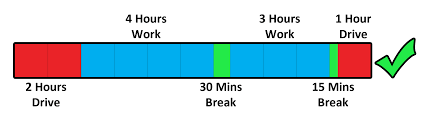
Understanding the working time directive driver hours UK regulations is essential for anyone operating heavy goods vehicles professionally. These rules exist to protect drivers from fatigue-related accidents and ensure road safety for all users. Whether you're a fleet manager, owner-operator, or employed driver, non-compliance can result in serious penalties including fines, licence suspension, and even imprisonment in severe cases. This guide explains exactly how the rules work, what you need to record, and how to stay on the right side of the law.
What Is the Working Time Directive for Drivers?
The Working Time Directive (WTD) is a piece of European legislation that was retained in UK law following Brexit. It applies to all mobile workers in the road transport sector, including HGV drivers, and sets limits on working hours to protect health and safety. The directive works alongside the EU Drivers' Hours Regulation, which specifically governs driving time, breaks, and rest periods.
It's crucial to understand that these are two separate but overlapping sets of rules. The EU Drivers' Hours Regulation focuses specifically on time spent behind the wheel and mandatory rest breaks. The Working Time Directive, by contrast, covers all working time — not just driving. This includes loading and unloading, vehicle maintenance checks, administrative paperwork, and any other duties performed as part of your job.
For most professional drivers, both sets of regulations apply simultaneously. You must comply with whichever rule imposes the stricter limit at any given time. This dual compliance requirement catches out many operators who focus solely on tachograph-recorded driving hours whilst overlooking their broader WTD obligations.
Key Working Time Limits Explained
The Working Time Directive imposes several important limits that all drivers and operators must understand. The headline figure is the 48-hour average weekly working limit, but the detail matters considerably.
Average weekly working time: Mobile workers must not exceed an average of 48 hours per week, calculated over a 17-week reference period (or 26 weeks if agreed through a workforce agreement). This means you can work more than 48 hours in some weeks provided the average stays within limits across the reference period.
Maximum weekly working time: Regardless of averaging, you cannot work more than 60 hours in any single week. This absolute cap provides a safety backstop even when averaged hours would technically permit longer weeks.
Night work limits: If you perform night work (any work between midnight and 4am, or between 1am and 5am), your working time must not exceed 10 hours in any 24-hour period. This limit cannot be averaged and applies strictly.
Breaks during work: You're entitled to a break of at least 30 minutes if your total working time exceeds 6 hours, or 45 minutes if it exceeds 9 hours. These breaks can be split into periods of at least 15 minutes each.
EU Drivers' Hours: The Driving-Specific Rules
Alongside the Working Time Directive, the EU Drivers' Hours Regulation sets specific limits on driving time. These rules are enforced through tachograph records and apply to most commercial vehicle operations.
Daily driving limit: You must not drive for more than 9 hours in a day. This can be extended to 10 hours twice per week, but no more frequently.
Weekly driving limit: Maximum driving time is 56 hours in any single week.
Fortnightly driving limit: You cannot exceed 90 hours of driving in any two consecutive weeks. This prevents operators from scheduling maximum 56-hour weeks back to back.
Continuous driving: After 4.5 hours of driving, you must take a break of at least 45 minutes (unless you start a rest period). This break can be replaced by a break of at least 15 minutes followed by a break of at least 30 minutes, taken in that order during the 4.5-hour period.
Daily rest: You must take at least 11 hours of rest in every 24-hour period, starting from the end of your last daily or weekly rest. This can be reduced to 9 hours no more than three times between weekly rest periods. Alternatively, you can split daily rest into two periods — the first at least 3 hours and the second at least 9 hours.
Weekly rest: Every week you must take an uninterrupted rest period of at least 45 hours (regular weekly rest) or 24 hours (reduced weekly rest). You cannot take two reduced weekly rest periods in succession, and any reduction must be compensated for by an equivalent period of rest taken in one block before the end of the third week following the week in question.
What Counts as Working Time?
One of the most common areas of confusion involves determining what activities constitute working time under the WTD. The definition is broader than many drivers and operators realise.
Working time includes driving, loading and unloading (where you're involved), supervising loading and unloading, carrying out vehicle safety checks, assisting passengers boarding and alighting, cleaning and maintaining the vehicle, any work aimed at ensuring passenger or cargo safety, complying with legal or regulatory duties relating to transport (including customs and police formalities), and any time during which you cannot freely dispose of your time and are required to be at your workplace ready to take up work.
Crucially, working time does not include rest breaks, periods of availability (where you know in advance roughly how long you'll be waiting and can dispose of your time freely), and travel to and from your normal workplace at the start and end of your working day.
Periods of availability deserve special attention. If you're waiting at a customer's premises to load but you know approximately how long the wait will be and you're free to leave the vehicle, this is typically a period of availability rather than working time. However, if you're required to stay with the vehicle or the wait duration is unknown, it counts as working time. Accurate recording of these distinctions is essential for compliance.
Recording and Documentation Requirements
Proper record-keeping is fundamental to demonstrating compliance with both the Working Time Directive and EU Drivers' Hours regulations. Different recording methods apply depending on the circumstances.
Tachograph records: Vehicles over 3.5 tonnes used for commercial operations must be fitted with a tachograph (digital for vehicles registered from 1 May 2006, analogue for older vehicles). The tachograph automatically records driving time, other work, periods of availability, and rest periods. Drivers must use their driver card and operate the tachograph correctly to ensure accurate records. You should keep your tachograph records for at least 28 days in the vehicle.
Employers must download digital tachograph data at least every 90 days and driver card data at least every 28 days. Records must be retained for at least one year and be available for inspection by the Driver and Vehicle Standards Agency (DVSA).
Working time records: Beyond tachograph data, employers must maintain separate records to demonstrate WTD compliance. This is because tachographs don't capture all working time — particularly activities at the beginning and end of shifts that don't involve the vehicle. Manual records or electronic systems must track total working hours across the reference period.
When purchasing a used commercial vehicle, it's worth checking its operational history. A vehicle history check can reveal important information about previous use, outstanding finance, and whether the vehicle has been properly maintained.
Exemptions and Special Cases
Certain operations and vehicles are exempt from some or all of these regulations. Understanding which rules apply to your specific situation is essential.
Vehicles exempt from EU Drivers' Hours (and therefore using domestic rules instead) include those with a maximum authorised speed not exceeding 40 km/h, those owned by the armed forces, civil defence, fire services, or forces responsible for maintaining public order, and certain specialised vehicles used for non-commercial purposes.
Domestic drivers' hours rules apply to vehicles exempt from EU rules. Under domestic rules, you must not drive for more than 10 hours per day, must take a break of at least 30 minutes after 5.5 hours of driving, and must not work for more than 11 hours on any working day.
The Working Time Directive applies more broadly than the EU Drivers' Hours Regulation. Even drivers operating under domestic rules are generally covered by WTD provisions, including the 48-hour average working week and night work limits.
Penalties for Non-Compliance
The consequences of breaching driver hours and working time rules are serious and can affect both drivers and operators.
Fixed penalties: DVSA officers can issue fixed penalty notices of up to £300 per offence at the roadside. Multiple infringements discovered during a single check can result in substantial total fines.
Court prosecution: More serious offences may be referred to magistrates' court, where unlimited fines can be imposed. In cases involving falsification of records or persistent serious breaches, prison sentences of up to two years are possible.
Operator licence consequences: The Traffic Commissioner can call operators to public inquiry to explain compliance failures. Potential outcomes include formal warnings, conditions attached to the licence, curtailment of authorised vehicles, suspension, or revocation of the operator's licence entirely.
Driver consequences: Individual drivers can face vocational licence suspension or revocation, preventing them from driving commercially even if they retain their standard driving licence.
DVSA enforcement is increasingly sophisticated, with roadside checks able to download tachograph data covering several months. Inspectors are trained to identify patterns of non-compliance that might not be apparent from a single day's records.
Practical Tips for Staying Compliant
Maintaining compliance requires systematic processes and attention to detail. The following approaches help operators and drivers avoid falling foul of the regulations.
Plan journeys realistically, allowing time for traffic, loading delays, and rest requirements. Optimistic scheduling is a primary cause of drivers feeling pressured to breach rules. Use transport management systems that factor in legal driving limits when allocating work.
Train drivers thoroughly on both sets of regulations and the proper use of tachographs. Many infringements result from misunderstanding rather than deliberate evasion. Regular refresher training helps maintain awareness.
Establish robust download and analysis procedures for tachograph data. Don't simply archive records — actively review them to identify problems before enforcement officers do. Many fleet management software packages include compliance monitoring features.
Maintain open communication between drivers and traffic office staff. Drivers must feel able to report when they cannot complete a journey legally without fear of repercussions. A culture that prioritises compliance protects everyone.
Frequently Asked Questions
Can drivers opt out of the 48-hour working week limit?
No. Unlike other sectors where individual opt-out agreements are permitted, mobile workers in road transport cannot opt out of the 48-hour average working week. This restriction exists because of the particular safety implications of driver fatigue. The limit applies regardless of any agreement between driver and employer.
Do agency drivers need to follow these rules?
Yes. EU Drivers' Hours and Working Time Directive rules apply to all drivers regardless of employment status. Both the agency and the operator using the driver share responsibility for ensuring compliance. Operators must establish systems to verify that agency drivers' total working time across all employers stays within limits.
What happens if I genuinely cannot find a safe place to stop?
The regulations permit drivers to exceed limits to the extent necessary to reach a suitable stopping place that doesn't compromise road safety or the security of vehicle, passengers, or load. You must record the reason manually on the tachograph printout or driver card at the latest upon arrival. This exception is not a general escape clause and applies only to genuinely unforeseeable circumstances.
Are the rules different for drivers of smaller commercial vehicles?
Vehicles between 2.5 and 3.5 tonnes used for international transport are now subject to EU Drivers' Hours rules following regulatory changes. Smaller vehicles used domestically may fall under domestic drivers' hours rules instead. The Working Time Directive generally applies regardless of vehicle size if you're a mobile worker performing commercial road transport activities.
How far back can enforcement officers check my records?
Drivers must carry records for the current day and previous 28 days. However, roadside digital downloads can access 56 days of data from driver cards. Employers must retain records for at least one year, and enforcement investigations can examine the full retention period. Patterns of non-compliance identified months after the event can still result in prosecution.
Key Takeaways
- The Working Time Directive limits average working time to 48 hours per week over a 17-week reference period, with an absolute maximum of 60 hours in any single week. This cannot be opted out of for mobile transport workers.
- EU Drivers' Hours rules separately limit daily driving to 9 hours (extendable to 10 hours twice weekly), weekly driving to 56 hours, and fortnightly driving to 90 hours, with mandatory breaks and rest periods throughout.
- Working time includes all duties — not just driving — such as loading, vehicle checks, and administrative tasks. Only genuine rest breaks and qualifying periods of availability are excluded.
- Accurate tachograph use and separate working time records are essential. Employers must download and retain data systematically and actively monitor compliance.
- Penalties range from £300 fixed penalties per offence to unlimited court fines, imprisonment for serious offences, and loss of operator or vocational driving licences.
- Both drivers and operators share legal responsibility for compliance. Planning realistic schedules and maintaining open communication are fundamental to avoiding breaches.