HGV Driver Logbooks: Tachograph Rules and Legal Requirements
HGV drivers must record hours using tachographs or manual logbooks. Here's what UK law requires, how long records must be kept, and what DVSA inspectors look for.
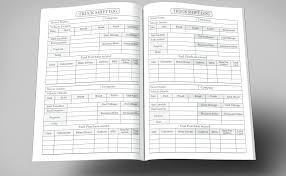
If you drive an HGV in the United Kingdom, understanding HGV driver logbook tachograph rules UK requirements is not optional — it is a legal obligation that directly affects your licence, your livelihood, and road safety. Whether you operate under EU-derived regulations or domestic rules, the law requires you to accurately record your driving time, breaks, and rest periods. Getting this wrong can result in fines, penalty points, and even prosecution for both drivers and operators.
This guide explains exactly what UK law requires from HGV drivers regarding tachographs and logbooks, how long you must keep records, what happens during DVSA inspections, and how to stay compliant in an industry where the rules are strictly enforced.
What Is a Tachograph and Why Is It Required?
A tachograph is a device fitted to heavy goods vehicles that automatically records driving time, distance travelled, speed, and the driver's activities. Its primary purpose is to ensure drivers do not exceed legal driving limits, thereby reducing fatigue-related accidents and maintaining fair competition within the transport industry.
Under UK law, tachographs are mandatory for most vehicles used for commercial goods transport that exceed 3.5 tonnes maximum permissible mass. This requirement stems from retained EU regulations, specifically Regulation (EC) No 561/2006 on driving times and Regulation (EU) No 165/2014 on tachographs, which continue to apply in Great Britain with certain modifications following Brexit.
There are two types of tachograph you may encounter. Analogue tachographs use circular wax-coated charts that must be manually inserted each day. Digital tachographs, which have been mandatory in new vehicles since 2006, use a driver card to record all activity electronically. Smart tachographs, introduced from June 2019 onwards, add GPS tracking and remote communication capabilities.
Legal Driving Hours and Rest Requirements
The tachograph exists to enforce strict limits on how long HGV drivers can work. Under EU-derived rules, which apply to most international and domestic journeys, you must not drive more than nine hours in a single day. This can be extended to ten hours twice per week, but no more. The maximum weekly driving time is 56 hours, with a fortnightly limit of 90 hours.
After driving for four and a half hours, you must take an uninterrupted break of at least 45 minutes. This can alternatively be split into two breaks — one of at least 15 minutes followed by one of at least 30 minutes — provided they fall within the four-and-a-half-hour driving period.
Daily rest requirements are equally strict. You must take at least 11 consecutive hours of rest within each 24-hour period starting from the end of your last daily or weekly rest. This can be reduced to nine hours up to three times between weekly rest periods. You may also split your daily rest into two periods — the first being at least three hours and the second at least nine hours — giving you 12 hours of rest in total.
Weekly rest must be at least 45 consecutive hours, though this can be reduced to 24 hours once every two weeks provided the reduction is compensated for by an equivalent rest period taken in one block before the end of the third week.
When Manual Logbooks Are Required
While digital tachographs have largely replaced paper records, there are circumstances where manual logbooks remain necessary. If your tachograph malfunctions during a journey, you must switch to manual recording immediately. UK law requires you to carry sufficient tachograph charts or printout paper to cover your journey, plus spare charts for emergencies.
Certain operations are exempt from tachograph requirements altogether but still require some form of driving hours record. Vehicles used for certain types of short-distance work, agricultural operations, or specialist purposes may fall under domestic drivers' hours rules instead. Under these rules, you must keep a written record of your hours, commonly referred to as a driver's logbook, for at least one week.
If you occasionally drive a vehicle requiring a tachograph but do not have a valid driver card — perhaps because it has been lost, stolen, or is malfunctioning — you must produce manual printouts at the start and end of your journey, writing your name and driver card or licence number on them. You must apply for a replacement card within seven calendar days.
Record-Keeping Requirements for Drivers
Drivers have specific legal obligations regarding record retention. You must carry your driver card whenever you drive a vehicle equipped with a digital tachograph. You must also carry printouts and any manual records from the current day plus the previous 28 calendar days. This requirement applies regardless of whether you drove on all those days — gaps in your records must be explained using manual entries or attestation forms.
When you begin and end your working day, and when you change vehicles, you must make manual entries recording the location. The country symbol and name of the nearest town are required. This information helps enforcement officers verify that your rest periods were genuine and taken in appropriate locations.
If you have not driven a tachograph-equipped vehicle for some days — perhaps due to illness, holiday, or working on exempt vehicles — you should carry an attestation form signed by your employer confirming your activities during those periods. Without this documentation, missing days on your records may be treated as potential driving hours offences.
Operator Record-Keeping Obligations
Transport operators bear significant responsibility for ensuring drivers comply with tachograph rules. Under UK law, operators must download data from vehicle unit tachographs at least every 90 days and from driver cards at least every 28 days. This data must be stored securely for at least one year from the date of recording.
Operators must also retain analogue tachograph charts for at least one year after use, organised in a way that allows inspection on request. They are expected to analyse tachograph data regularly to identify potential infringements and take appropriate action. DVSA inspectors will examine whether operators have adequate systems for monitoring driver compliance.
Failing to maintain proper records or allowing drivers to breach driving hours rules can result in enforcement action against the operator's licence. In serious cases, this may lead to conditions being placed on the licence, curtailment, suspension, or revocation. The consequences extend beyond fines — losing your operator's licence effectively ends your ability to run an HGV business.
What DVSA Inspectors Look For
The Driver and Vehicle Standards Agency conducts roadside checks and operator premises inspections to enforce tachograph regulations. During a roadside stop, officers will typically ask to see your driver card, analogue charts, and printouts for the current day plus the previous 28 days. They use specialist equipment to download and analyse your data on the spot.
Inspectors are trained to identify common forms of manipulation and fraud. They look for inconsistencies in records, signs of card sharing between drivers, evidence of driving without a card inserted, and patterns suggesting deliberate falsification. Modern smart tachographs make manipulation increasingly difficult due to encrypted data and remote download capabilities.
At operator premises, DVSA traffic examiners will examine your record-keeping systems, download schedules, and how you respond to identified infringements. They will want to see that you actively manage driver compliance rather than simply collecting data without analysis. Inadequate systems may be considered evidence that you are not of good repute to hold an operator's licence.
Penalties for Non-Compliance
The penalties for tachograph offences are severe and affect both drivers and operators. Drivers can receive fixed penalty notices of up to £300 per offence for less serious breaches. More serious offences, or repeated infringements, may result in court prosecution with unlimited fines and potential imprisonment for the most egregious cases.
Driving licence endorsements are common for tachograph offences. Accumulating twelve or more penalty points within three years results in disqualification, which for professional drivers effectively means losing your job. Some offences can result in immediate disqualification regardless of existing points.
For operators, the financial consequences can be substantial. Beyond direct fines, DVSA may impose conditions on your licence, reduce your fleet authorisation, or pursue revocation for persistent non-compliance. If you are considering purchasing an HGV for commercial use, it is worth conducting a vehicle history check to ensure there are no outstanding issues that could affect your operating position.
International Operations After Brexit
Following the UK's departure from the European Union, the rules governing tachographs for international journeys have become more complex. UK driver cards remain valid for use in EU member states, and EU-derived driving hours rules continue to apply for international journeys. However, drivers may face additional scrutiny at borders and should ensure their documentation is impeccable.
From 21 August 2025, smart tachographs version 2 become mandatory for vehicles first registered on or after that date. These advanced devices include enhanced features for border crossing detection and will be required for all vehicles engaged in international transport from 2026 onwards. If you operate internationally, you should plan your fleet renewal strategy with these deadlines in mind.
Northern Ireland has some different arrangements due to the Windsor Framework, with certain EU rules applying directly. Operators working across the Irish border should seek specific advice on which regulations apply to their operations.
Frequently Asked Questions
How long must I keep my tachograph records?
Drivers must carry records for the current day plus the previous 28 days when on the road. Operators must retain downloaded digital data and analogue charts for at least one year from the date of recording. Many operators keep records for longer to defend against potential retrospective challenges.
What should I do if my driver card is lost or stolen?
You must report the loss or theft to the issuing authority within seven calendar days and apply for a replacement. You can continue driving for up to 15 calendar days without a card, but you must produce printouts at the start and end of each journey with your name and card or licence number written on them.
Can I drive a tachograph vehicle without a card in an emergency?
You can drive without a card if it is damaged, malfunctioning, lost, or stolen, but only temporarily. You must make manual printouts and entries, and obtain a replacement card as soon as possible. Deliberately driving without a card to avoid recording is a serious criminal offence.
Do tachograph rules apply to all HGVs?
Tachographs are required for vehicles over 3.5 tonnes used for commercial goods transport. Certain exemptions exist for specific vehicle types and operations, including some agricultural work, military vehicles, and vehicles used by certain public services. Exempt vehicles may still be subject to domestic driving hours rules requiring manual records.
What happens if my tachograph breaks down mid-journey?
If your tachograph fails, you must switch to manual recording using charts or printouts with handwritten annotations. You must have the tachograph repaired by an authorised workshop as soon as reasonably practicable, and in any case within one week if the vehicle returns to base during that time.
Key Takeaways
- HGV drivers must use tachographs to record driving time, breaks, and rest periods under strict EU-derived and domestic rules that carry significant penalties for non-compliance.
- Drivers must carry their driver card and records for the current day plus the previous 28 days at all times when driving tachograph-equipped vehicles.
- Operators must download vehicle data at least every 90 days and driver card data at least every 28 days, retaining all records for a minimum of one year.
- DVSA enforcement includes roadside checks and operator premises inspections, with officers trained to identify manipulation and inadequate compliance systems.
- Penalties include fixed penalties, court fines, driving licence points, disqualification, and operator licence action including potential revocation.
- Smart tachograph requirements are becoming stricter, with version 2 devices mandatory for new vehicles from August 2025 and for all international transport vehicles from 2026.