Security Guard Duty Log: What UK Operations Must Record
What UK security operations must record in a duty log, SIA requirements, patrol records, incident handling, and retention rules.
 By Jamie Dawson · Editor
▮
Updated 07 Sep 2026
▮
2 min read
By Jamie Dawson · Editor
▮
Updated 07 Sep 2026
▮
2 min read
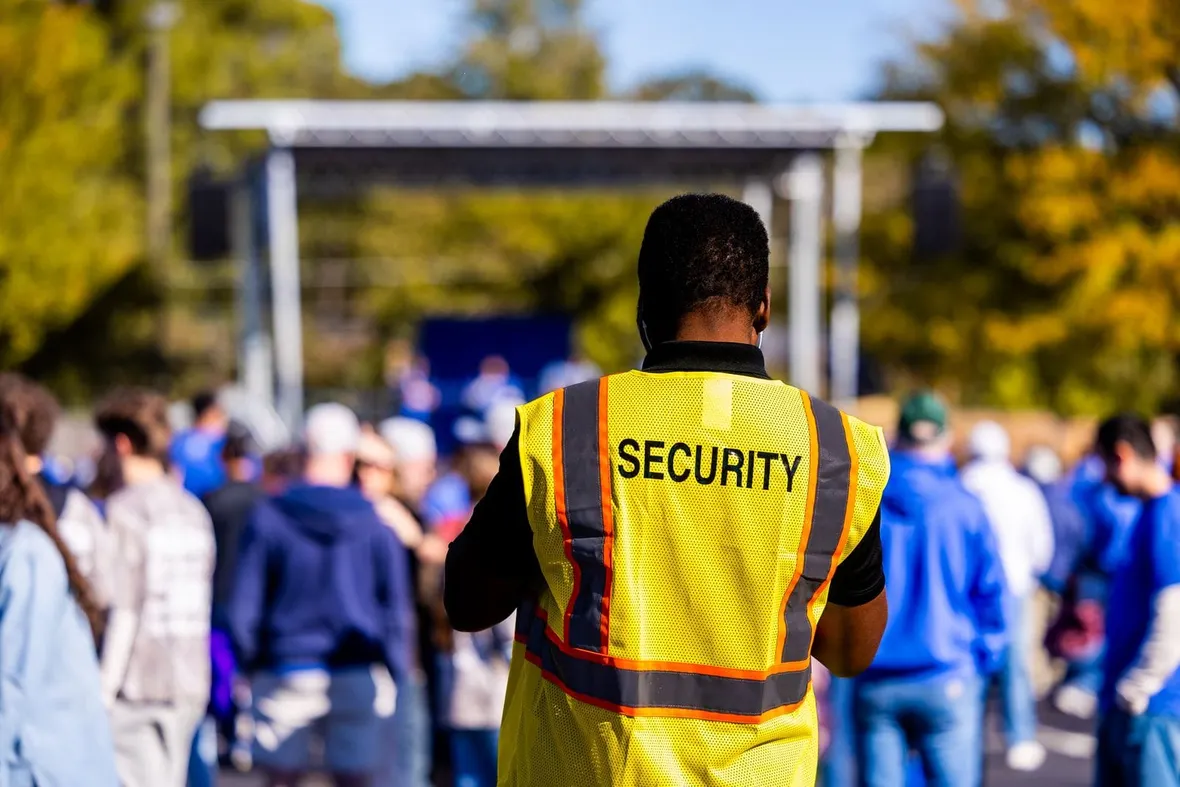
The security guard duty logbook (sometimes called a site log, occurrence book, or guard report) is a fundamental document in the management of contract and in-house security operations. It provides a contemporaneous written record of every security-relevant event during a shift: patrols conducted, incidents observed, persons challenged, alarms activated, and handovers completed. Without it, a security operation has no audit trail and no defence against liability claims.
The Legal and Regulatory Context
Security operatives working in the UK must be licensed by the Security Industry Authority under the Private Security Industry Act 2001. The SIA licence regime sets minimum standards for training and conduct but does not prescribe a specific format for duty logbooks. However, professional security contracts almost universally require comprehensive logbook maintenance, and many clients' insurance conditions require it.
For security operations at licensed premises (nightclubs, bars, and venues requiring SIA door supervisor staff) the duty log may be inspected by licensing authorities as part of ongoing compliance monitoring.
What a Security Duty Logbook Must Contain
A professional duty logbook should record the date, shift times, and names and SIA licence numbers of all operatives on duty. It should record the times and routes of all patrols conducted, the results of each patrol including any anomalies observed, all incidents however minor, with time, location, description of the incident, persons involved, and action taken. It should record all persons challenged or refused entry at door-supervised venues, all handovers between shifts including the condition of the premises and any outstanding matters, all alarm activations and responses, all visitors to the security post, and any communications with supervisors, clients, or emergency services.
Incident Reports
Where an incident is significant, an assault, theft, fire, medical emergency, or other event requiring emergency services involvement, a separate detailed incident report should be completed in addition to the logbook entry. The incident report provides a more structured account that can be produced as evidence in legal proceedings or insurance claims. The incident report reference should be cross-referenced in the duty logbook.
Digital Security Logbooks
Many larger security operations now use digital guard tour systems and security management software that automatically records patrol times and routes via GPS or NFC checkpoints, generates duty logs, and stores records securely in the cloud. These systems provide stronger evidence of patrol compliance than manually completed paper logs, which can be retrospectively completed without detection. Digital records should be backed up and retained in the same way as paper records.
How Long Must Security Logbooks Be Kept?
Security duty logbooks should be retained for a minimum of six years. Personal injury claims arising from security incidents (assaults, slips and falls, wrongful detention) can be brought for up to six years after the incident in most circumstances, and up to three years from the date of knowledge in personal injury cases. Retaining records for six years provides protection against the majority of claims.
Key Takeaways
- Duty logbooks must record shift details, patrols, incidents, handovers, alarms, and all security-relevant events, contemporaneously, not retrospectively.
- SIA licence numbers of all operatives on duty must be recorded.
- Significant incidents require a separate incident report in addition to the logbook entry.
- Digital guard tour systems provide stronger evidence of patrol compliance than paper logs.
- Logbooks must be retained for a minimum of six years to cover the personal injury limitation period.
- At licensed premises, duty logs may be inspected by licensing authorities as part of compliance monitoring.