Construction Site Logbooks: Legal Requirements UK
The full list of site logbooks UK construction operations are legally required to keep under CDM 2015, plus HSE inspection and retention rules.
 By Jamie Dawson · Editor
▮
Updated 08 Sep 2026
▮
6 min read
By Jamie Dawson · Editor
▮
Updated 08 Sep 2026
▮
6 min read
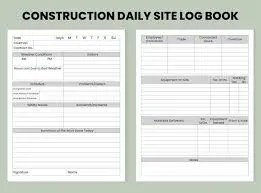
Construction sites are among the most heavily regulated workplaces in the UK. Alongside the physical demands of managing a safe working environment, responsible persons must maintain comprehensive records covering everything from site inductions to plant inspections, near misses to method statements. A construction site logbook (or more accurately, a suite of site records) is not optional. It is a legal requirement under multiple pieces of legislation, and its absence during an HSE inspection can trigger enforcement action regardless of how safely the site is actually operating.
This guide explains which logbooks and records are legally required on UK construction sites, who is responsible for maintaining them, and what inspectors look for.
The Legal Framework for Construction Site Records
Several pieces of legislation impose record-keeping obligations on construction sites. The Health and Safety at Work Act 1974 establishes the overarching duty to maintain safe working conditions and document safety arrangements. The Construction (Design and Management) Regulations 2015 (universally known as CDM 2015) impose specific documentation requirements on clients, principal designers, and principal contractors.
The Management of Health and Safety at Work Regulations 1999 require suitable and sufficient risk assessments to be recorded where five or more persons are employed. The Provision and Use of Work Equipment Regulations 1998 mandate records of equipment inspections. The Lifting Operations and Lifting Equipment Regulations 1998 require thorough examination reports for all lifting equipment. COSHH Regulations require records of hazardous substance assessments and exposure monitoring.
Taken together, these regulations mean that a busy construction site will typically need to maintain dozens of distinct records simultaneously.
The CDM 2015 Health and Safety File
Under CDM 2015, the principal designer must prepare and maintain a Health and Safety File throughout the project. This document compiles information that future owners and occupiers will need to safely maintain, alter, and eventually demolish the structure.
The Health and Safety File must include the design and construction information, details of materials used including hazardous substances, information about installed plant and equipment, and details of any residual risks that future maintenance must address. At project completion, the principal designer hands the file to the client, who must keep it and make it available to anyone carrying out subsequent work on the building.
The Health and Safety File is a permanent record that follows the building through its lifetime. Losing it, or failing to prepare it, is a serious breach of CDM 2015 with significant legal and commercial consequences.
Site Induction and Visitor Records
Every person who enters a construction site must receive a site induction before beginning work. This induction must cover emergency procedures, site hazards, welfare facilities, and site rules. A record of each induction must be maintained, showing the inductee's name, the date, what was covered, and who delivered the induction.
Visitor registers must be kept at site entrances, recording the name, organisation, time of arrival and departure of every visitor. These records serve two purposes: they provide a roll call in the event of an emergency, and they demonstrate to inspectors that site access is controlled.
Many principal contractors now use digital induction systems where workers complete an online module before arriving on site, with automatic record generation. These are entirely acceptable provided the records are accessible and can be produced on request.
Risk Assessments and Method Statements
Risk assessments and method statements (commonly referred to together as RAMS) are required for all significant construction activities. A risk assessment identifies the hazards associated with a particular task, evaluates the likelihood and severity of harm, and specifies control measures. A method statement describes how the work will be carried out safely, incorporating the controls identified in the risk assessment.
RAMS must be prepared before work begins, reviewed whenever significant changes occur, and retained for the duration of the project and beyond. Workers must be briefed on the RAMS relevant to their activities, and records of these briefings must be kept.
The principal contractor is responsible for ensuring that RAMS are in place for all activities on site, including those carried out by subcontractors. Accepting a subcontractor's RAMS without reviewing their adequacy does not discharge this responsibility.
Plant and Equipment Inspection Records
All work equipment on a construction site must be inspected and maintained in accordance with the manufacturer's requirements and relevant regulations. Different types of equipment have different inspection requirements.
Lifting equipment (cranes, hoists, lifting accessories) must undergo thorough examination by a competent person at specified intervals under LOLER. Thorough examination reports must be kept for at least two years and must be available for inspection by the HSE.
Scaffolding must be inspected before first use, after any event likely to have affected its stability, and at regular intervals not exceeding seven days. Scaffold inspection records must be completed on the day of inspection and kept until the scaffolding is dismantled.
Excavations must be inspected at the start of each shift where persons could be buried or trapped, after any event likely to have affected stability, and at least once every 24 hours where persons work in them. Records of each inspection must be kept.
COSHH Records
Construction sites routinely involve hazardous substances, concrete dust, wood dust, asbestos, solvents, adhesives, and many others. The Control of Substances Hazardous to Health Regulations 2002 require employers to assess the risks from these substances and implement appropriate controls.
COSHH assessments must be recorded and reviewed regularly. Where exposure monitoring is required (for substances with Workplace Exposure Limits) monitoring records must be kept for at least five years, or for 40 years where the substance can cause ill health with a long latency period.
Safety data sheets for all hazardous substances used on site must be accessible to workers and kept as part of the site records.
Accident and Incident Records
Under the Reporting of Injuries, Diseases and Dangerous Occurrences Regulations 2013 (RIDDOR) certain workplace incidents must be reported to the HSE and recorded. These include fatalities, specified injuries, over-seven-day incapacitation injuries, occupational diseases, and dangerous occurrences.
All accidents and near misses must be recorded in an accident book, regardless of whether they meet RIDDOR reporting thresholds. The record must include the date, time, location, what happened, and the nature of any injury. Accident records must be kept for at least three years.
Near miss records are equally important. They identify hazards before they result in injury. A culture of near miss reporting, backed by proper record keeping, is one of the strongest indicators of a well-managed site.
Training and Competence Records
Principal contractors must ensure that all workers on site are competent to carry out their assigned tasks. Competence records, training certificates, CSCS cards, operator licences, and similar documents, must be maintained and available for inspection.
CSCS card records should be checked and copied at site induction. Copies of certificates for specialist activities (asbestos removal, confined space work, work at height) must be retained on site. Operators of plant and equipment must hold appropriate licences, and copies must be kept in the site records.
Frequently Asked Questions
How long must construction site records be kept?
This varies by record type. Scaffold inspection records must be kept until scaffolding is dismantled. LOLER thorough examination reports must be kept for at least two years. COSHH exposure monitoring records must be kept for at least five years. Accident records must be kept for at least three years. The Health and Safety File must be kept for the lifetime of the building.
Who is responsible for maintaining site records?
Under CDM 2015, the principal contractor is responsible for site-level records. The principal designer is responsible for the Health and Safety File. Individual employers are responsible for records relating to their own employees and activities.
Can construction site records be kept digitally?
Yes. Digital records are acceptable provided they are secure, accessible, and can be produced in hard copy on request. Many sites now use cloud-based site management software that generates and stores records automatically.
What happens if records are missing during an HSE inspection?
Missing records can result in improvement notices, prohibition notices, or prosecution. The HSE does not need to prove that actual harm occurred, failure to maintain required records is itself a breach of the relevant regulations.
Key Takeaways
- Construction site records are required under multiple pieces of legislation including CDM 2015, LOLER, PUWER, and COSHH, non-compliance is a criminal offence.
- The CDM 2015 Health and Safety File must be prepared throughout the project and handed to the client on completion. It follows the building for its lifetime.
- Site induction records, visitor registers, RAMS, plant inspection records, and accident books are all legally required on most construction sites.
- Different records have different retention periods, from the lifetime of the building to as little as two years for some equipment inspection records.
- Digital record-keeping systems are fully acceptable provided records are secure and accessible to inspectors on request.
- The principal contractor bears overall responsibility for ensuring site-level records are maintained, even for activities carried out by subcontractors.
Related guides
- Duty of care waste records: what UK businesses must keep
- Excavation Inspection Records: UK Legal Requirements
Related guides
- CDM 2015 Pre-Construction Information Pack: What It Must Contain
- COSHH for Cleaning Products: UK Employer Duties Under HSE Rules
Free download: our building logbook template follows the Approved Document L handover expectations and the CIBSE TM31 structure, as a contents register you populate as the work completes.