Consumer Unit Replacement: Certificates and Building Regs UK
A UK homeowner's guide to consumer unit replacement paperwork, Minor Works vs EIC, Part P notification, Building Regs, and retention rules.
 By Jamie Dawson · Editor
▮
Updated 21 Aug 2026
▮
4 min read
By Jamie Dawson · Editor
▮
Updated 21 Aug 2026
▮
4 min read
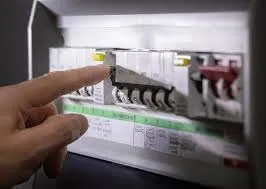
Replacing a consumer unit (commonly called a fuse box) is one of the most common domestic electrical jobs in the UK, and one of the most heavily regulated. It is notifiable work under Part P of the Building Regulations, it requires specific certification, and it must be carried out by a registered competent person. Homeowners who have had consumer units replaced without proper certification face real problems when selling their property, and some face safety risks they are entirely unaware of.
Why Consumer Unit Replacement Is Notifiable
Part P of the Building Regulations 2010 classifies consumer unit replacement as notifiable work in dwellings. This means it must either be carried out by an electrician registered with an approved competent person scheme (such as NICEIC, NAPIT, or ELECSA) who can self-certify the work, or it must be notified to the local authority building control before work begins, with a formal inspection and approval process following completion.
The reason for this classification is straightforward: the consumer unit is the heart of a property's electrical installation. A faulty or incorrectly installed consumer unit can cause house fires or electrocution. The regulatory framework reflects this risk.
What Certificates Are Required?
When a consumer unit is replaced by a registered competent person, two documents must be produced. The electrician must issue an Electrical Installation Certificate confirming that the new consumer unit has been designed, constructed, inspected, and tested in accordance with BS 7671, the IET Wiring Regulations. The electrician must also notify their scheme provider, who notifies the local authority building control on their behalf. Building control then issues a Building Regulations Completion Certificate confirming the work has been registered.
Both documents must be retained by the homeowner. They are evidence that the work was carried out legally and to the required standard, and they will be required when the property is sold.
What Does the Electrical Installation Certificate Cover?
The Electrical Installation Certificate for a consumer unit replacement must include details of the installation address, a description of the work carried out, the results of inspection and testing, including earth fault loop impedance, RCD operation times, and prospective fault current, confirmation that the installation complies with BS 7671, and the name, address, and qualifications of the electrician.
The certificate must be completed at the time of the work. It cannot be issued retrospectively by a different electrician who did not carry out the original installation, though some electricians will carry out a new inspection and test and issue a certificate based on that, which is a different document.
The RCD Requirement
Current UK wiring regulations, BS 7671:2018 as amended, require that new consumer units in domestic properties provide RCD protection for most circuits. An RCD (residual current device) detects earth faults and disconnects the circuit within milliseconds, providing protection against electric shock and fire. Consumer units that do not provide adequate RCD protection do not comply with current regulations.
When a consumer unit is replaced, the electrician must ensure the new unit complies with BS 7671 as currently in force. Records of the RCD testing carried out at installation should be included in the Electrical Installation Certificate and retained by the homeowner.
What Happens When Selling Without Certificates?
When a property is sold, the buyer's solicitor will ask (through the standard Law Society TA6 property information form) whether any building works have been carried out and whether building regulations approval was obtained. A consumer unit replacement carried out without certification is notifiable work done without compliance, and must be disclosed.
The options for a seller in this position are limited. Retrospective building control approval requires the installation to be inspected, which may involve exposing wiring and potentially remedial work if the installation does not comply. Indemnity insurance is available but insurers are increasingly reluctant to provide it for electrical work where safety is a concern. Some buyers' solicitors will insist on full certification regardless of indemnity insurance.
The simplest and cheapest approach is always to obtain proper certification at the time of the original work.
Frequently Asked Questions
Can I replace a consumer unit myself?
Homeowners can carry out some electrical work themselves under the Building Regulations, but consumer unit replacement is notifiable work that must be either carried out by a registered competent person or notified to building control. A homeowner who replaces a consumer unit themselves must notify building control before starting work and have the installation inspected on completion.
How long should I keep the certificates?
For the lifetime of the property. Consumer unit certificates will be needed when the property is sold, which could be decades after the work was carried out. Store them securely alongside other property documentation such as planning permissions and FENSA certificates for windows.
What if the previous owner cannot provide the certificate?
If you are buying a property where a consumer unit has been replaced but no certificate can be produced, you have three options: request that the seller obtains retrospective building control approval; request that the seller obtains indemnity insurance; or negotiate a price reduction to reflect the risk and cost of dealing with the issue after purchase.
Key Takeaways
- Consumer unit replacement is notifiable work under Part P of the Building Regulations. It must be carried out by a registered competent person or notified to building control.
- The electrician must issue an Electrical Installation Certificate and notify their scheme provider, who informs building control, a Building Regulations Completion Certificate follows.
- Both certificates must be retained by the homeowner for the lifetime of the property.
- New consumer units must comply with BS 7671 and provide adequate RCD protection, RCD test results must be recorded in the certificate.
- Missing certificates for consumer unit replacements cause significant problems when selling, retrospective certification or indemnity insurance may be required.
- Homeowners who want to replace a consumer unit themselves must notify building control before starting and have the work inspected on completion.