Fire Risk Assessment: UK Business Legal Requirements (2026)
What UK businesses must record in a Fire Risk Assessment, RRO 2005 scope, review intervals, the Fire Safety (England) Regulations 2022, and Martyn's Law impact.
 By Jamie Dawson · Editor
▮
Updated 07 Sep 2026
▮
3 min read
By Jamie Dawson · Editor
▮
Updated 07 Sep 2026
▮
3 min read
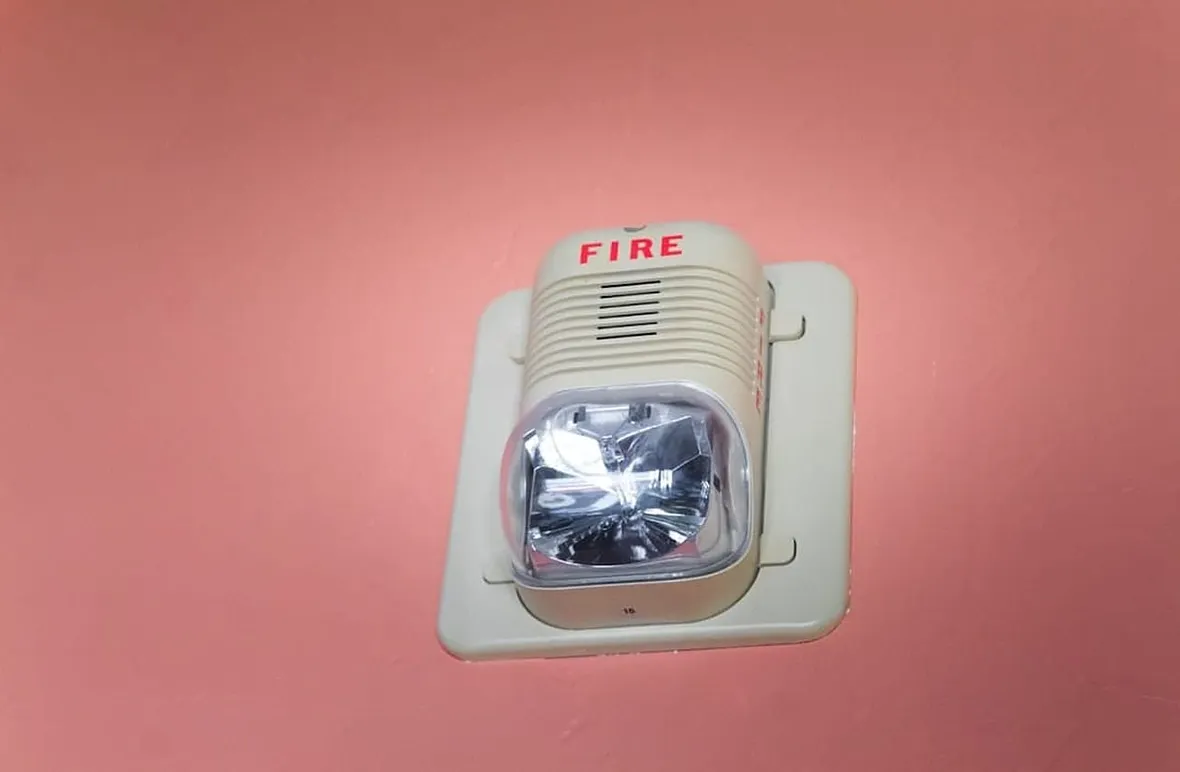
Quick answer: Every UK non-domestic premises must have a written Fire Risk Assessment (FRA) under the Regulatory Reform (Fire Safety) Order 2005. The "responsible person" must ensure the FRA is reviewed regularly and whenever circumstances change. Following the Fire Safety (England) Regulations 2022 and the Protect Duty (Martyn's Law) coming into force, the bar is rising. Non-compliance carries unlimited fines and, for serious failures, imprisonment.
The Grenfell inquiry and the Manchester Arena attack have both reshaped UK fire safety law. If your FRA was last reviewed in 2020 or earlier, it almost certainly no longer meets the current standard. Not because it was wrong then, but because the legal framework around it has changed.
Who is the "responsible person"
Under the 2005 Order, the responsible person is usually the employer, landlord, building owner, or occupier. In multi-tenanted commercial buildings, responsibilities are split between the freeholder (common parts) and tenants (their demise). A written agreement is strongly advisable to avoid gaps.
What a Fire Risk Assessment must cover
Every FRA must identify fire hazards, identify people at risk (including employees, visitors, vulnerable groups), evaluate existing risks and how they can be reduced, record findings, prepare an emergency plan, and provide information and training. The PAS 79 methodology is the de facto UK standard, though not mandatory.
Who can write an FRA
The law says the FRA must be carried out by a "competent person". For a low-risk office under 5 staff, the business owner can do it themselves using HM Government guidance. For anything more complex, multi-storey, sleeping accommodation, large public assembly, construction phase, a specialist assessor registered with IFE, IFSM, or the FRACS scheme is expected.
When to review
The 2005 Order requires review "regularly" and "whenever there is reason to suspect it is no longer valid". In practice this means annually for most premises, and immediately after any of the following: a change of use, a refurbishment, new tenants, a fire incident, a near-miss, new staff being introduced to premises, a regulatory change.
The Fire Safety (England) Regulations 2022
For buildings over 11 metres, responsible persons must now provide residents with fire safety instructions, share information with the fire and rescue service, carry out quarterly checks of fire doors in common parts and annual checks of flat entrance doors, and provide the local fire service with up-to-date plans.
Martyn's Law (Protect Duty)
The Terrorism (Protection of Premises) Act 2025 (Martyn's Law) brings in new duties for publicly accessible premises. Standard tier applies to premises expecting 200+ people; enhanced tier at 800+. Operators must have a written protection plan, train staff, and register with the regulator. For many venues, the FRA and Protect Plan will now be reviewed together.
Recordkeeping and retention
The FRA and supporting records, training logs, drill records, fire equipment checks, alarm test records, should be retained for the life of the premises and for at least 3 years after decommissioning. Local fire and rescue services can demand sight at any time under Article 27 of the 2005 Order.
Fines and prosecutions
Penalties include unlimited fines in Crown Court; up to 2 years' imprisonment for the most serious breaches; enforcement notices and prohibition notices from fire and rescue authorities. Post-Grenfell prosecutions of landlords and building owners have increased sharply.
Common mistakes
- A single "templated" FRA used unchanged across multiple premises
- No record of who assessed it, when, and on what evidence
- FRA signed off but significant findings never actioned
- No designated responsible person in writing in a multi-tenanted building
- Drill records and fire door checks missing entirely
FAQs
Do I need an FRA for a home office?
No. The Fire Safety Order applies to non-domestic premises. Home workers don't require a separate FRA for their home, though employers must consider fire risk in their overall homeworker risk assessment.
Can I write my own FRA?
For low-risk, small premises, yes, using HM Government guides. For anything else, use a competent specialist. The responsible person is accountable regardless of who wrote the document.
How often must fire doors be checked?
For common-parts doors in buildings over 11m, quarterly. For individual flat entrance doors, annually. General workplace fire doors should be inspected at least every 6 months as part of routine checks.
What about historic buildings and listed premises?
The same rules apply. Listed-building consent may affect which improvements can be made, but the duty to assess and manage fire risk is unchanged.
Related guide
- Fire risk assessment action plans: closing out and recording the actions
- Martyn's Law (Protect Duty): A UK Venue Operator's Complete Guide
Sources and further reading
- Regulatory Reform (Fire Safety) Order 2005
- gov.uk: Workplace fire safety
- Fire Safety (England) Regulations 2022 guidance
- Terrorism (Protection of Premises) Act 2025 ("Martyn's Law")
Last reviewed 2026-04-22 by Jamie Dawson, Editor. Corrections: corrections@logbook.co.uk