Vehicle Provenance Records: What HPI Misses and Why It Matters
HPI checks cover finance, write-offs and theft. Vehicle provenance records cover what HPI doesn't, keeper history, originality, restoration evidence and reputation. The gap matters most on cars over £10,000.
 By Jamie Dawson · Editor
▮
Updated 19 Aug 2026
▮
7 min read
By Jamie Dawson · Editor
▮
Updated 19 Aug 2026
▮
7 min read
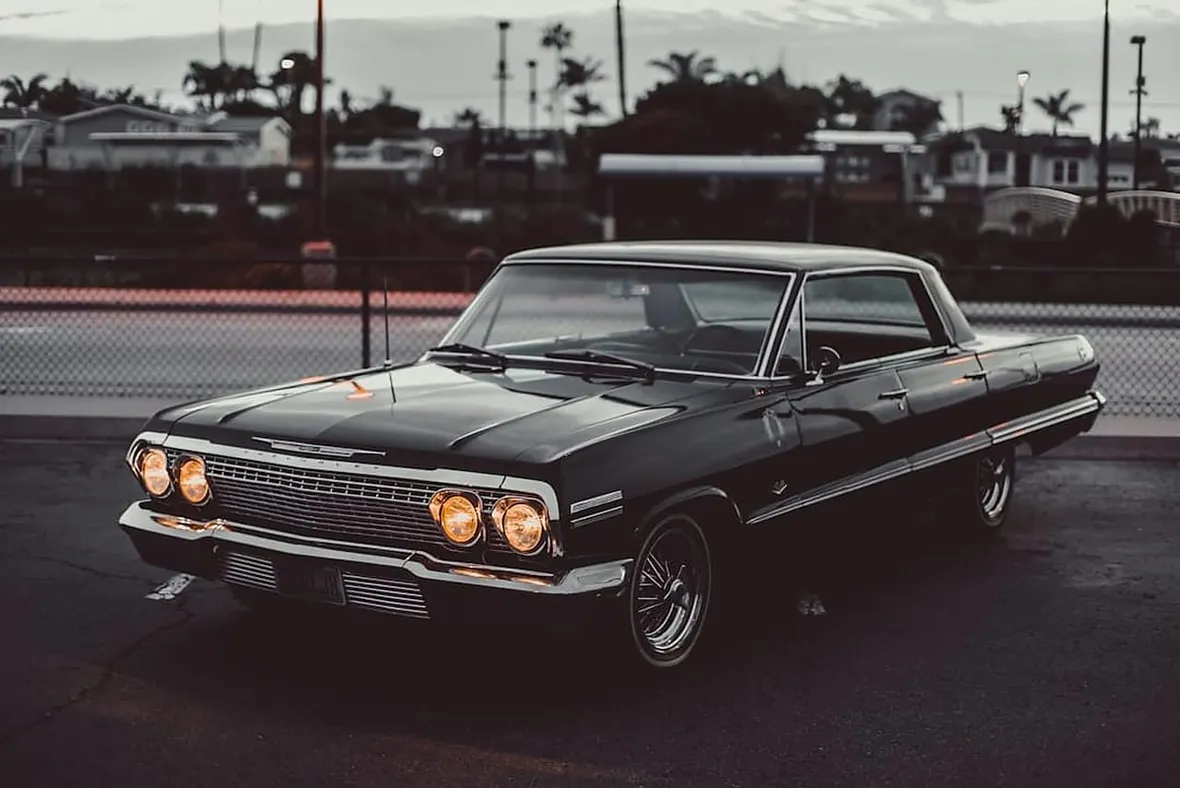
Quick answer: HPI checks tell you whether a UK car is legally and financially clean today. Vehicle provenance records tell you the car's life, every keeper, every restoration, every documentary trace from manufacture to now. HPI catches finance fraud and write-off concealment. Provenance catches everything else: undocumented restorations, fake authenticity, mileage anomalies between MOTs, identity confusion on engine and chassis numbers. For UK cars over £10,000, the gap between HPI clean and provenance complete can mean 20 to 40% of value. The market increasingly rewards complete provenance and punishes its absence.
The UK used-car industry has spent thirty years training buyers to ask for an HPI check. That was the right answer when finance and write-off concealment were the biggest scams. They still are at the bottom of the market. But at the top, and increasingly in the middle, the failure modes have moved on. The buyers paying £20,000, £40,000, £100,000 for a vehicle in 2026 aren't worried about hire purchase. They're worried about whether the engine in the car is the engine the chassis was born with. They're worried about whether the restoration actually happened. They're worried about the gaps in the keeper chain that suggest a car was off the road for an unrecorded reason. None of that is on an HPI report.
The categorical difference
HPI is a regulatory snapshot. It pulls live data from DVLA, finance houses, insurance industry write-off registers, the Police National Computer, and MOT records. It tells you, at this moment, whether the car has outstanding finance, whether it's been written off, whether it's flagged as stolen, and whether the mileage at MOT has moved consistently. The data is excellent for what it covers.
Provenance is a longitudinal record. It tells you who has owned the car, when, in which region, under what circumstances. It tells you what work has been done, by whom, with what parts, on what dates. It tells you whether the car has appeared in print, in concours, in race, in film. It tells you the originality of the engine, the chassis, the body, the trim. It is, in the same sense as a museum object's provenance, the chain of custody and condition that makes the object what it is.
The two checks answer different questions. HPI: is this car clean? Provenance: is this car what the seller says it is?
What HPI catches
An HPI check should and does surface:
- Outstanding finance (current hire purchase, PCP, lease)
- Insurance write-off categorisation (Cat A, B, S, N) where reported to MIAFTR
- Stolen markers on the Police National Computer
- Plate transfer history
- Number of previous keepers
- Date of first registration and current keeper start date
- Mileage at most recent MOT and major mileage discrepancies
What HPI catches is broadly what an institutional lender or fleet operator needs to know before transacting. It is the regulatory and financial check.
What HPI doesn't catch
HPI does not surface, because the data does not exist in HPI's sources:
- Whether the engine number on the chassis is the original engine fitted at the factory
- Whether the chassis number has been re-stamped following accident damage
- Whether the car has had a colour change without the V5C being updated
- Whether the body shell has been replaced (common on classic Land Rovers, Minis, Beetles)
- Whether the restoration was done to manufacturer specifications or to a budget
- Whether the previous keeper was a high-mileage commercial user (taxi, courier, driving instructor) where the use isn't logged
- Whether the car was off the road for an extended period and why
- Whether the car has documented competition history (race, rally, hill climb)
- Whether the car has been featured in any media or concours
- The narrative of the car's life, anecdote, photograph, magazine feature, club record
None of these are HPI's failure. HPI is doing the job it was designed for. They're simply different jobs.
Where the value gap is
For mainstream used cars under £10,000, the provenance gap matters less. The buyer is buying transport. As long as the car is clean on HPI, mechanically sound, and the V5C is genuine, the deal works.
The gap widens at £15,000-£25,000. At this point, buyers are choosing among comparable cars and provenance becomes a tiebreaker. Cars with complete service histories, documented keeper chains, and matching numbers commute at the top of their price band; cars with gaps sit on forecourts longer or sell at the bottom.
Above £25,000 (and especially above £50,000) provenance is no longer a tiebreaker. It is the price. Two physically identical Aston Martin V8 Vantages can list at £55,000 and £85,000 because the £85,000 car has Aston Martin Heritage Trust certification, original keeper records, full DSR, restoration documentation with receipts, and inclusion in Octane. The £55,000 car has none of those. Mechanically they may be indistinguishable.
The components of provenance
Identity
The matching-numbers test. Engine number stamped on the block matches the engine number on the V5C. Chassis number stamped on the body matches the V5C. Body number on the trim plate (where applicable) matches the body shell. For high-end vehicles, the manufacturer's records can confirm the original specification, Aston Martin Heritage Trust, Jaguar Heritage, Ferrari Classiche, Porsche Heritage, and any deviation is documented.
Custody
The keeper chain from new. Earliest available V5 or V5C. Subsequent V5Cs preserved through reissues. DVLA Subject Access Requests can recover the chain DVLA has on file, though access is limited for privacy reasons. Marque clubs often hold richer keeper records than DVLA itself.
Originality
Period photographs. Original literature (handbook, service book, dealer brochures specific to the car). Build sheets where issued. Tank stickers and trim plates intact. Documentation of any modification (minor or major) with date and circumstance.
Maintenance and restoration
Every workshop visit recorded with invoice, garage, mileage, parts, labour, and total cost. Restoration logs with photographs at each stage. MOT history printed and filed. DSR printouts where applicable.
Reputation
Concours d'Elegance entries and results. Magazine features citing the chassis number. Club registry entries. Race or rally history with logbook (Motorsport UK, HSCC, FIA HTP) and event documentation. Insurance agreed-value renewals over time.
Why the market is changing
The UK classic and prestige used-car market has matured. Auction houses (Bonhams, Silverstone Auctions, Historics, ACA, Iconic Auctioneers) have spent twenty years training buyers to expect provenance. The catalogue entries themselves are provenance documents. A car going to Bonhams without provenance either doesn't make the catalogue or sits below estimate.
That training has now reached the £15,000-£40,000 mainstream classic and prestige market. Buyers searching online for a 911, an E-Type, a Mini Cooper Works, a Caterham, a TVR. All carry the auction-house provenance expectation into their forecourt-and-Auto-Trader buying. Sellers without files lose the buyers; sellers with files win them.
What this means for the industry
Three implications.
First, the gap between HPI and provenance is no longer obscure to buyers. The information arbitrage that supported "HPI clean" as sufficient is closing. Buyers are doing the secondary research themselves, Google searches for chassis numbers, marque-club enquiries, magazine archive searches, MOT history printouts.
Second, the dealer market is bifurcating. Dealers investing in provenance documentation (file builders, club liaisons, Heritage Trust certificate procurement) are moving up-market. Dealers ignoring provenance are being sorted into the lower price bands or the auction trade circuit.
Third, the data-and-records categories that were historically separate, HPI for finance, marque clubs for authenticity, DVLA for keeper, MOT history for mileage, insurance for valuation, are being asked to integrate. The buyer increasingly wants one document, with one trusted issuer, that brings these together.
The DIY provenance file
For owners building their own files:
- Submit a DVLA Subject Access Request for the registration history, recovers V5C reissue dates and keeper changes (privacy-redacted)
- Print the full MOT history from gov.uk, the most-trusted UK mileage record
- Compile every service invoice in chronological order
- Apply for marque-club Heritage certification where available, Aston Martin Heritage Trust, Jaguar Heritage Trust, Porsche Heritage, etc.
- Photograph trim plates, build plates, engine numbers: high-resolution, dated
- Search magazine archives for the chassis number, Octane, Classic & Sports Car, Practical Classics
- Contact previous keepers via marque club or DVLA forwarding service for letters of authentication
- Obtain an agreed-value insurance valuation annually for the file
The check sequence in 2026
For any used car purchase over £10,000:
- Free gov.uk vehicle information check (basics)
- Free MOT history (mileage and condition over time)
- Paid HPI check (finance, write-off, theft, mileage anomalies)
- Provenance file inspection (keeper chain, originality, maintenance, reputation)
- Physical V5C inspection (genuine document, current reference number)
- Independent inspection or marque specialist appraisal where applicable
The first three are the regulatory and financial check. The last three are the provenance and authenticity check. A complete buying process needs all six.
FAQs
Is provenance the same as HPI?
No. HPI is regulatory and financial, finance, write-off, theft. Provenance is custody and authenticity, keepers, originality, maintenance, reputation. They overlap on mileage history; everywhere else they're separate.
How long does it take to build a provenance file?
Existing owners with a documented car: 2-4 weeks for marque-club enquiry, Heritage certificate, DVLA SAR. Owners building from scratch on an undocumented car: 3-6 months including correspondence with previous keepers, parts research, photograph sourcing.
What's the cheapest single provenance step that adds the most value?
Marque-club Heritage certification, where available. Cost £150-£600. Value impact 5-15% on a £20,000+ car.
Does provenance matter on cars under £10,000?
Less. Mainstream cars at this price band are bought as transport. Provenance is welcomed but rarely paid for. Above £15,000 it starts to matter; above £25,000 it dominates.
Related guides
- Classic car provenance: how to build a bulletproof file
- Free vs paid HPI check 2026
- The 7 documents to check when buying a used car
- V5C Logbook UK: The Complete Guide
- Historic vehicle registration: Q plates and DVLA records
Sources
- gov.uk: Check MOT history
- gov.uk: Request information from DVLA
- Federation of British Historic Vehicle Clubs (FBHVC)
- UK auction house catalogue archives (Bonhams, Silverstone Auctions, Historics)
Last reviewed 2026-05-05 by Jamie Dawson, Editor.