Fire Extinguisher Servicing Records: BS 5306 UK Complete Guide (2026)
A UK business guide to fire extinguisher servicing records, BS 5306 annual checks, 5-year extended service, 10-year replacement, competent person rules, and the records insurers actually ask for.
 By Jamie Dawson · Editor
▮
Updated 19 Aug 2026
▮
4 min read
By Jamie Dawson · Editor
▮
Updated 19 Aug 2026
▮
4 min read
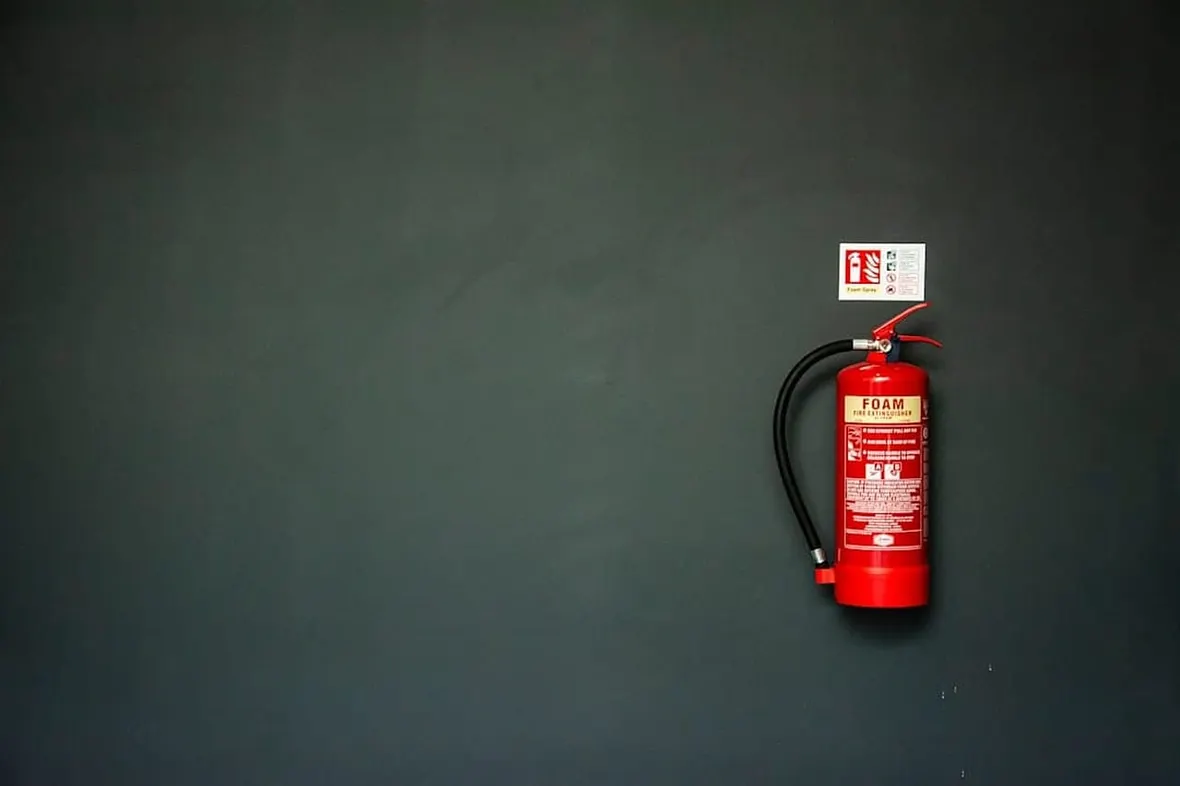
Quick answer: Every UK fire extinguisher must receive monthly visual checks by the responsible person, an annual service by a BAFE-registered competent person (BS 5306-3), an extended service every 5 years (10 years for CO2), and discharge test or replacement every 10 years. Records must evidence every check with date, engineer, findings, and actions. Missing records are treated as equivalent to missing extinguishers. Both by insurers and by enforcing authorities.
Fire extinguisher servicing is one of those compliance tasks that "just happens" on most sites, until it doesn't. A missed annual service, a 5-year interval slipped by, a new unit installed without the old one being removed. Each of those shows up on the fire risk assessment and on the insurance claim form when something goes wrong.
The standard, BS 5306
BS 5306 is the UK standard in four parts:
- BS 5306-3: Commissioning and maintenance of portable fire extinguishers
- BS 5306-8: Selection and positioning of portable fire extinguishers
- BS 5306-9: Recharging and refurbishment of fire extinguishers
- BS 5306-0: Guide to selecting and positioning fire extinguishers
Compliance is not a legal requirement in itself, the legal requirement is that extinguishers are fit for use under the Regulatory Reform (Fire Safety) Order 2005. BS 5306 is the de facto standard the fire service and insurers apply to judge "fit for use".
Inspection intervals
- Monthly: visual check by the responsible person. Presence, location, tamper tag, pressure gauge, damage
- Annual (12 months): service by competent person. Weigh, full external check, hose/nozzle, pressure, refill instructions
- 5-year extended service: discharge test and internal examination for water, foam, and powder extinguishers. Hydraulic pressure test where applicable
- 10-year extended service: for CO2 extinguishers (instead of 5-year). Includes hydraulic test
- 10-year replacement (water, foam, powder, wet chemical) typically replaced or fully refurbished
Who is a competent person
BS 5306-3 requires the engineer to be "competent". In practice this means:
- Trained against BS 5306-3 (or BS 5306-4 for gas systems)
- Typically employed by or certified under BAFE SP101 (portable extinguishers)
- Carrying the correct tools, parts, and replacement stock
- Up to date on manufacturer bulletins
A general handyman or site maintenance team member is not a competent person for BS 5306-3 purposes. Using one invalidates your annual service and exposes the site at risk.
What records must contain
Per unit, per service event:
- Extinguisher serial number or unique identifier
- Date of service
- Engineer name and BAFE certification reference
- Type of check (monthly, annual, 5-year, 10-year)
- Findings, pass/fail, defects noted
- Parts replaced
- Next due date
- Signature or digital sign-off
The site logbook
A single site logbook should consolidate: extinguisher register (location, type, size, expiry), monthly check sheet, annual service report per unit, extended service records, defects log, and staff training records on extinguisher use.
Most competent service companies now provide digital logbooks via apps (BlazeSys, Fireco, InCheck). These are acceptable to fire officers and insurers provided exports are available on demand.
Extinguisher types and intervals
- Water (9L): 5-year extended service, 10-year replacement
- Foam (6L or 9L): 5-year extended service, 10-year replacement
- Powder (ABC, 1/2/3/4/6/9/12kg): 5-year extended service, 10-year replacement
- CO2 (2kg or 5kg): 10-year extended service only, then replacement
- Wet chemical (Class F, kitchen): 5-year extended service, 10-year replacement
- Fire blankets: annual visual, replace on damage or manufacturer's recommendation
Placement and coverage
BS 5306-8 governs selection and positioning:
- Maximum 30m travel distance to an appropriate extinguisher for Class A risks
- Maximum 10m for Class B risks
- At least one extinguisher per 200m² floor area
- Mounted on brackets or stands, 1 to 1.5m from the ground
- Visible from normal approach routes; signed with compliant signage
From the installer's perspective
The most common sub-optimal conditions we see on annual service: extinguishers used as doorstops (invalid), hidden behind furniture or stored items (invalid), pressure gauge in red zone (fail), tamper tag broken (recent use, needs re-inspection), and location mismatches (the fire risk assessment places units where they're not present on site).
Common mistakes
- Monthly check not documented, only annual service records on file
- Engineer not BAFE-registered, service invalidated at audit
- Extended service missed because someone assumed annual covered it
- Old extinguishers not removed when new ones installed, double register, confusion
- CO2 inspection treated as 5-year when it's 10-year
FAQs
What's the difference between "service" and "extended service"?
Annual service is external, weigh, inspect, test pressure. Extended service (5- or 10-year) is internal, discharge, internal inspection, hydraulic test on water/foam/CO2 units.
Can I move extinguishers between rooms?
Yes, but the fire risk assessment must be updated, signage repositioned, and the extinguisher register amended. Ad hoc moves without documentation create gaps.
Do I need extinguishers in every room?
No, coverage is by travel distance and floor area, not room-by-room. BS 5306-8 gives the formulae.
What if my insurer audits and finds a defect?
Insurers typically require evidence of remedy within 7 to 14 days. A failed audit with ignored findings can invalidate cover.
Related guides
- Fire Risk Assessment: UK requirements
- Fire alarm logbooks
- Emergency lighting logbooks
- Care Home Fire Safety Records: A UK Operator's Post-Grenfell Guide (2026)
- Fire Marshal Training Records: What UK Employers Must Keep (2026)
Sources and further reading
- BS 5306-3:2017 Commissioning and maintenance of portable fire extinguishers
- BS 5306-8:2012 Selection and positioning
- BAFE: scheme guide and registered provider list
- Fire Industry Association
This guide is written by Jamie Dawson, who also runs Gemini AM/PM, a UK fire and security installer, the operator perspective in this guide comes from day-to-day site work.
Last reviewed 2026-04-22 by Jamie Dawson, Editor. Corrections: corrections@logbook.co.uk