Written-Off Cars: Categories Explained (Cat A, B, S, N)
The UK car write-off categories A, B, S, N explained, what each one means for the DVLA V5C marker, value, MOT, and whether the car can return to the road.
 By Jamie Dawson · Editor
▮
Updated 21 Aug 2026
▮
4 min read
By Jamie Dawson · Editor
▮
Updated 21 Aug 2026
▮
4 min read
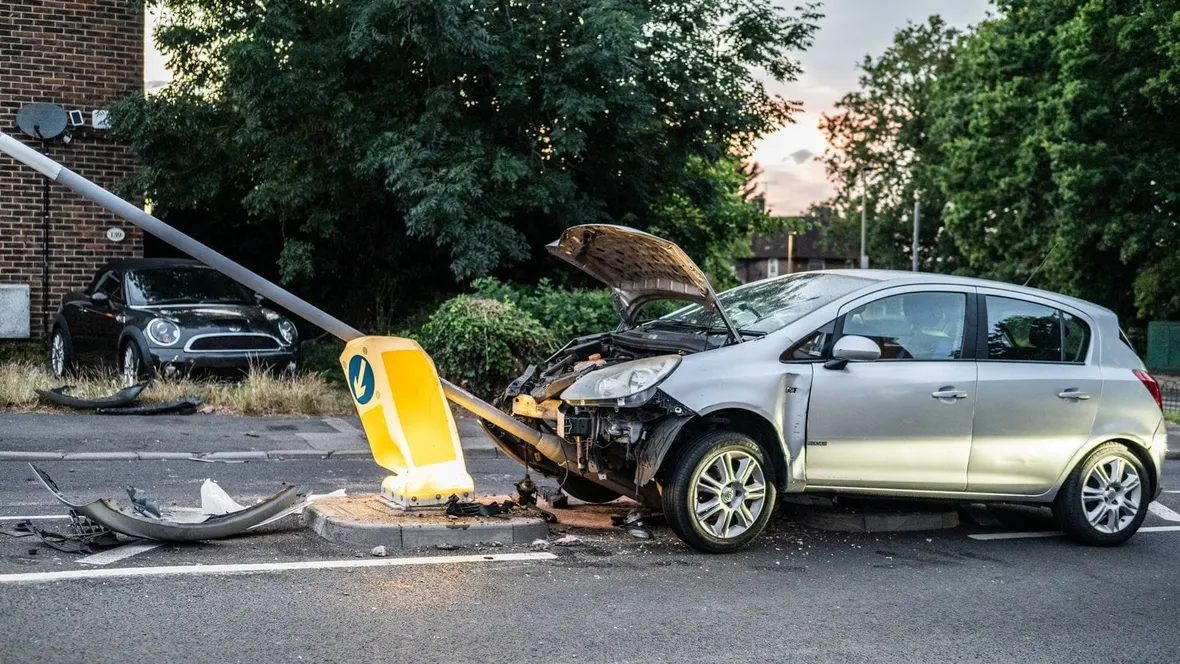
When a car is badly damaged (usually in an accident) an insurance company may declare it a total loss and write it off. But not all written-off cars are the same. The category assigned to a written-off vehicle tells you a great deal about its condition, its legal status, and whether it can safely return to the road.
This guide explains the four write-off categories used in the UK, what each one means, and what to look for if you are considering buying a car with a write-off history.
What Does Written Off Mean?
When an insurer writes off a vehicle, it means the cost of repairing it is judged to be uneconomical relative to the car's pre-accident value, or that the damage makes the vehicle unsafe to repair. The insurer pays out a settlement to the policyholder and takes ownership of the vehicle.
The vehicle is then assigned a write-off category, which is recorded on insurance databases and flagged by any vehicle history check. The category determines whether the car can be repaired and returned to the road, and under what conditions.
The Four Write-Off Categories
Cat A, Scrap Only
A Category A write-off is the most severe. The vehicle must be crushed in its entirety. No parts can be salvaged or resold. Cat A is typically assigned to vehicles that have been so severely damaged that even individual components pose a safety risk, or to vehicles that have been involved in fires, floods, or other catastrophic events.
A Cat A vehicle can never legally return to the road. If you ever see a Cat A vehicle being offered for sale, walk away immediately.
Cat B, Body Shell Must Be Crushed
A Category B write-off means the body shell must be crushed, but certain mechanical components can be salvaged as spare parts. The vehicle as a whole cannot return to the road. If a vehicle shows Cat B on a history check, do not buy it for road use under any circumstances.
Cat S, Structural Damage, Can Be Repaired
A Category S write-off has sustained structural damage, to the chassis, crumple zones, or other load-bearing elements. Unlike Cat A and B, a Cat S vehicle can be repaired and legally returned to the road after a formal inspection confirming repairs meet the required standard.
Cat S vehicles are often sold at 20 to 40 percent below market value. This can represent genuine value if repairs have been done properly. However, structural damage that has been poorly repaired can compromise safety in a subsequent accident. Always commission an independent inspection before buying.
Cat N, Non-Structural Damage, Can Be Repaired
A Category N write-off has sustained damage that does not affect structural integrity, typically electrical, cosmetic, or non-structural component damage. Cat N vehicles do not require a formal structural inspection before returning to the road. They typically sell at 10 to 20 percent below market value.
The Old Categories, Cat C and Cat D
Before October 2017, the UK used categories A, B, C, and D. Cat C was broadly equivalent to today's Cat S, and Cat D to Cat N. Both could legally return to the road after repair.
How to Check if a Car Has Been Written Off
A written-off vehicle's category is recorded on insurance databases and flagged by any reputable paid vehicle history check. The free DVLA check does not reliably return write-off category data.
Run a full vehicle history check before buying any used car. If the check returns a write-off marker, you will be able to see the category and, in some cases, the date of the write-off event.
Should You Buy a Written-Off Car?
Cat A and Cat B, never buy for road use. No exceptions.
Cat S, potentially viable if repairs have been independently verified. Get a specialist inspection. Negotiate a meaningful discount. Be aware that some insurers will not cover Cat S vehicles or charge significantly higher premiums.
Cat N, more straightforward for cosmetic damage. Verify repairs are complete and professionally finished. A discount is reasonable given the history.
In all cases, full disclosure of the write-off history to your insurer is essential. Failing to disclose a known write-off can invalidate your insurance. Also note that a write-off in a car's history is separate from its service history. When considering a Cat S or Cat N car, the service history still matters significantly for assessing the car's overall maintenance standard.
Frequently Asked Questions
Can a Cat S car pass an MOT?
Yes. A Cat S vehicle that has been repaired and re-registered can pass an MOT like any other vehicle. The MOT does not assess the quality of previous structural repairs in detail.
Will my insurance be affected if I buy a write-off?
Yes. You must disclose a known write-off history to your insurer. Some insurers will decline to cover certain categories, and others will charge higher premiums.
Can the write-off marker be removed from a vehicle's history?
No. A write-off category is a permanent record on insurance databases.
Is a written-off car worth less when I come to sell it?
Yes. A write-off history will typically reduce the vehicle's value by 20 to 40 percent for Cat S and 10 to 20 percent for Cat N compared to an equivalent undamaged car.
Key Takeaways
Cat A and Cat B write-offs can never legally return to the road, do not buy them for road use. Cat S indicates structural damage that can be repaired, always get an independent inspection before buying. Cat N indicates non-structural damage, lower risk but still worth verifying repairs. Always run a paid vehicle history check, the free DVLA check does not reliably return write-off data. Disclose any known write-off history to your insurer, failure to do so can invalidate your policy.
Related reading: Full Service History vs Partial: Does It Really Matter? | What Is an HPI Check and Do You Need One? | How to Check if a Car Has Outstanding Finance