How to Change Your Name on a V5C Logbook (Marriage, Deed Poll) UK
Name changes on the V5C are free, but post-only, unlike address changes. Exactly what to alter on the logbook and where to send it.
 By Jamie Dawson · Editor
▮
Updated 14 Sep 2026
▮
3 min read
By Jamie Dawson · Editor
▮
Updated 14 Sep 2026
▮
3 min read
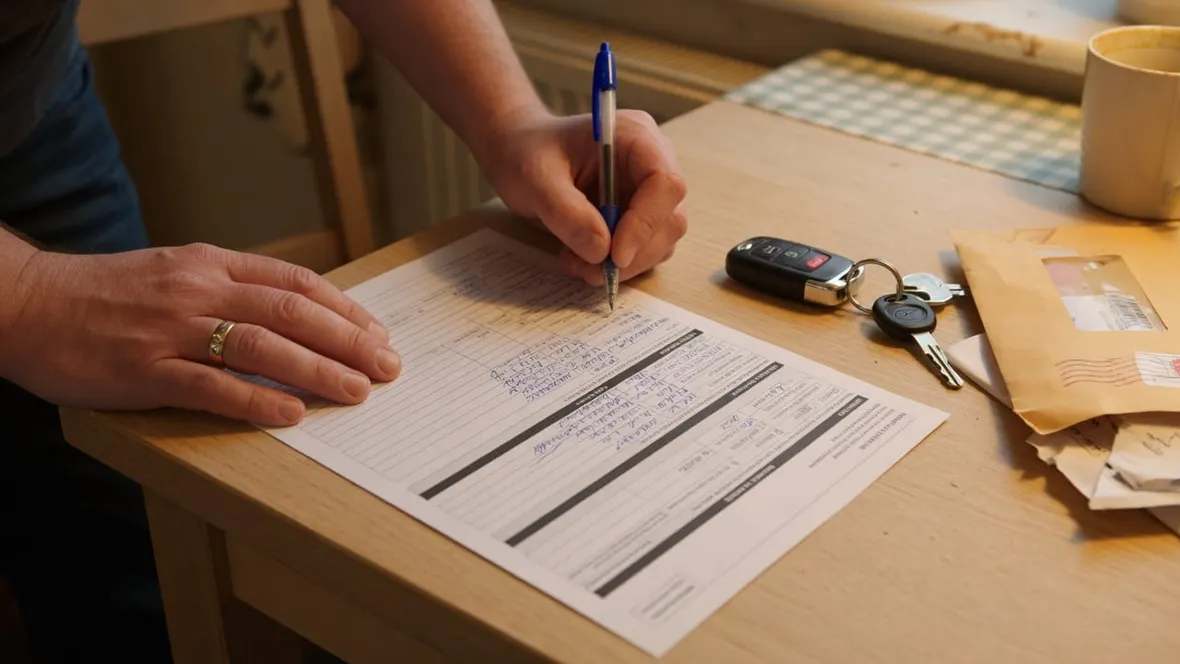
Quick answer: Changing your name on the V5C is free, but unlike an address change it cannot be done online. On a new-style log book (multi-coloured numbered blocks), write the new name in full in section 3 (no initials) and post the whole book to the address in section 3: DVLA, Swansea, SA99 1DD. On an older-style book, write it in section 6, sign, and send it to the address in section 8. Married, divorced, or fixing a misspelling: send no proof. Deed poll or other legal name change: include the proof. The new V5C can take up to 6 weeks, and you can drive as normal while you wait.
Prefer to watch? 40 seconds, from our YouTube channel.
Step by step
Rules change. Get the two-minute Logbook Briefing.
New DVLA processes, deadlines and free templates, in one short email. No spam, one-click unsubscribe.
- Find which style of log book you have. New-style V5Cs have multi-coloured numbered blocks on the front; older ones do not.
- New style: write the new name in full in section 3 (“changes to current keeper's details”). Do not give initials. Send the whole book to the DVLA address shown in section 3 (DVLA, Swansea, SA99 1DD).
- Older style: write the new name in full in section 6, sign it, and send the book to the address in section 8.
- Enclose proof only for a legal name change such as a deed poll. Marriage, divorce and misspelling corrections need no evidence.
- Post the whole log book, not a photocopy. Use tracked post if the thought of it going missing bothers you: replacements cost 25 pounds.
If your vehicle tax is due soon
Tax the vehicle before you post the log book away, either online or at a Post Office that deals with vehicle tax (take your MOT evidence if the Post Office asks). Once the book is in the post you cannot use it to tax the car.
What NOT to do
- Do not use the online address-change service for a name change. It cannot do names.
- Do not send your marriage certificate or decree absolute: DVLA does not need them for the V5C. (Your driving licence name change is a separate process and does need evidence.)
- Do not send just a page or a photocopy: DVLA needs the whole log book.
Don't forget the rest of the set
The V5C is one of several records to update: driving licence (free, form D1 or online), insurance (tell them immediately, a mismatched name can complicate claims), and any private plate retention documents. Our V5C decoder covers what each section does.
FAQs
Can I change the name on my V5C logbook online?
No. DVLA has no online service for name changes: the online service only handles addresses. A name change goes by post. Write the new name in full in section 3 of a new-style log book (section 6 on an older style), sign it, and post the whole book to DVLA, Swansea, SA99 1DD.
Do I need to send proof of my name change?
Only for a legal change of name such as a deed poll, which you must include. If your name changed because you got married or divorced, or it was simply spelt incorrectly, gov.uk says you do not need to send any proof.
How long does the new V5C take to arrive?
gov.uk says it can take up to 6 weeks. If it has not arrived after 4 weeks, contact DVLA. If 6 weeks pass and DVLA has not told you anything, a replacement costs 25 pounds. You can drive as normal the whole time.
Marriage, divorce and deed poll: is the process the same?
The form-filling is the same and all are free, but the envelope differs: marriage, divorce and misspelling corrections need no evidence, while a deed poll or other legal name change must be included with the log book.
Related guides
- The V5C decoded: every section explained
- Change the address on your V5C
- Lost your V5C? What to do
- The V62 form explained
- Motorsport Scrutineering: What Documents You Need at Every Event
Sources
gov.uk Change your name on the V5C log book (checked 5 August 2026)
Last reviewed 2026-08-05 by Jamie Dawson, Editor.