Property Logbooks UK: The Complete Guide (2026)
What a property logbook is, what goes in it, how it differs from a sales pack, the 2026 reforms making it standard in England, and how to build yours. The complete UK guide.
 By Jamie Dawson · Editor
▮
Updated 26 Sep 2026
▮
4 min read
By Jamie Dawson · Editor
▮
Updated 26 Sep 2026
▮
4 min read
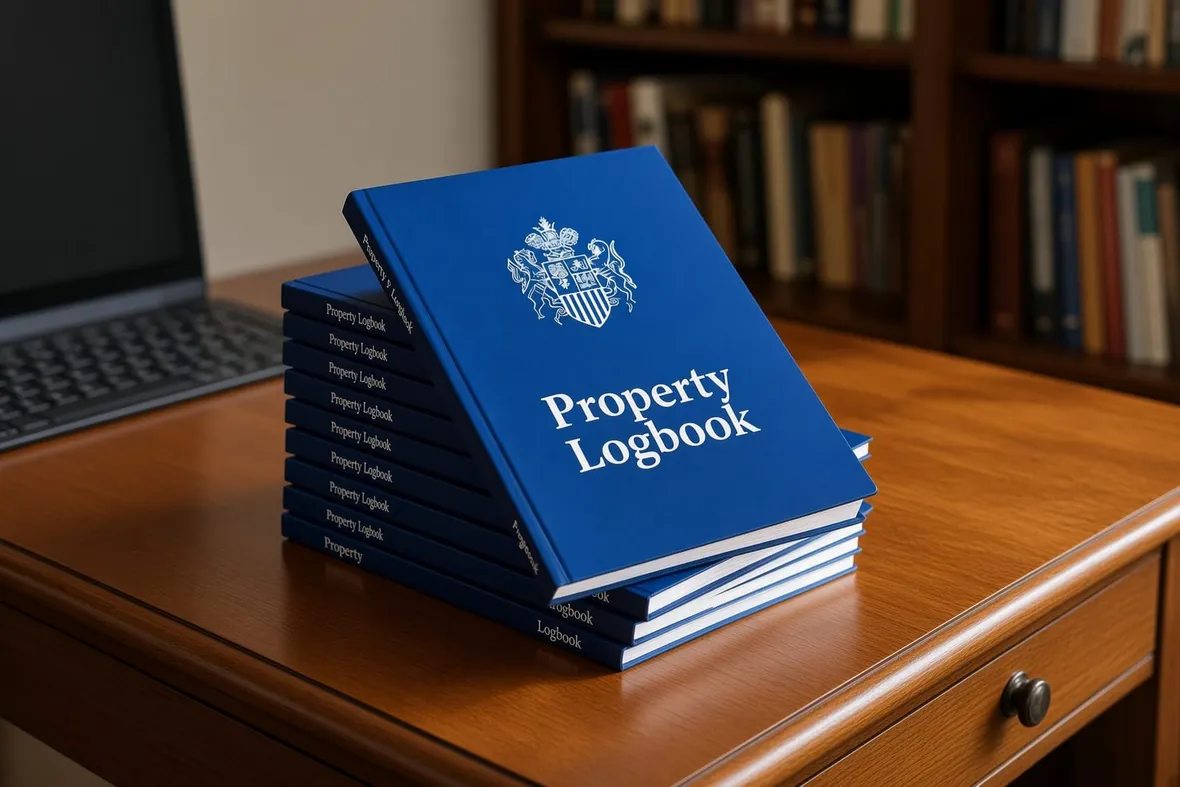
In short: A property logbook is a secure digital record of a home (its certificates, guarantees, works history and compliance documents) owned by the homeowner and shared with agents, conveyancers and buyers. After the UK government’s June 2026 home buying and selling reforms, a digital property logbook is set to become a standard part of selling a home in England. This guide explains what a property logbook is, what goes in it, the new rules, and how to build yours.
Prefer to watch? 40 seconds, from our YouTube channel.
Logbook.co.uk flagships independent coverage of the 2026 property-logbook and sales-pack reforms. We do not sell logbook software. Status: not law yet.
What is a property logbook?
A property logbook is the home’s permanent file: a single, organised record of everything that proves a property is safe, legal and well-maintained. It travels with the home rather than the owner, so when you sell, the buyer inherits a complete, verifiable history, and when you buy, you start with one ready to keep.
What is a “digital” property logbook?
A digital property logbook is the online version the government wants to standardise. In the words of the reform, logbooks “store current and historic information on a property, giving homeowners control of their data and reducing transaction risk by verifying its provenance.” The data is held securely and can be shared with the professionals in a transaction in real time, instead of being chased document by document.
Why property logbooks matter now: the 2026 reforms
On 18 to 19 June 2026 the Ministry of Housing, Communities & Local Government published its Home Buying and Selling Reform roadmap, putting digital logbooks and upfront sales packs at the centre of a plan to cut the average move by around four weeks, save first-time buyers about £650, and halve the near one-in-three sales that fall through. For the full detail, see what the 2026 reforms mean. Note: this is a commitment to legislate, not yet law, see our live reform tracker for current status.
What goes in a property logbook?
Most UK homes need some combination of the documents below. Our full document guide explains how to get each one; here is the quick checklist.
Property logbook checklist
- ✓HM Land Registry title register & plan (plus the lease, if leasehold)
- ✓Valid EPC
- ✓Gas safety records & boiler certificates
- ✓EICR & Part P electrical certificates
- ✓Building Regulations sign-off & FENSA window certificates
- ✓Planning permissions
- ✓Boiler & heating history
- ✓Solar / renewables certification & warranties
Property logbook vs sales pack: what’s the difference?
A property logbook is a lifetime record that stays with the home. A sales pack is the upfront bundle a seller provides at the point of listing for one specific sale, condition report, searches, leasehold costs, chain status, EPC and council tax band. The reforms use both: the pack speeds up the current sale, the logbook keeps the information current for the next one.
How to build your property logbook
You don’t need to wait for the law. Gather the documents above into one place (digital copies are ideal) and you’ll be ready whether you sell next month or after the reforms take effect. A printable checklist makes it easy to track what you still need.
Who provides property logbooks?
The market is coordinated by the MHCLG-supported Residential Logbook Association (RLBA), whose members provide digital logbook products built to a common data standard. As an independent publication, we cover what these are and how to choose. We are not a provider ourselves.
Is a property logbook mandatory?
Not yet. The government has committed to make digital logbooks and sales packs a standard, eventually mandatory part of property transactions in England, legislated “when parliamentary time allows.” Follow the reform tracker for the latest.
Primary sources
gov.ukHome Buying and Selling Reform roadmap (2026) gov.ukMHCLG news release (18 June 2026)
More property logbook guides
- Are HIPs coming back? The 2026 rules
- Property logbook providers: how to choose one
- How much does a property logbook cost?
- Property sales pack: what’s inside, who pays & the new rules
- What goes in a property logbook: the document checklist
- Property logbooks across the UK: England, Scotland, Wales & NI
- Will property logbooks succeed where HIPs failed?
- Reform tracker: is a property logbook law yet?
The UK Property Logbook series
- Start here: What goes in a property logbook? · Digital logbooks explained
- The 2026 reform: Home buying & selling reform · Reform timeline · Sales packs · Logbooks vs HIPs · Property passports
- Buying & selling: Conveyancing documents checklist · Material information: Parts A, B, C · Logbooks and house sales · England, Scotland, Wales & NI
- Landlords & leasehold: Property logbook for landlords · The PRS Database: what landlords must register · Leasehold documents · New-build handover documents
- Providers & costs: How to choose a provider · The RLBA provider landscape · What a logbook costs
- Free tools: Sales Pack Readiness Checker · Landlord Compliance Calendar · Your Home’s Public Record checker
Property logbooks are the newest branch of a long tradition, see every type of UK logbook explained.
Logbooks, sales packs and binding contracts
Logbooks help information travel; sales packs put it upfront; binding conditional contracts are the planned commitment step once packs are embedded. All three are reform pieces, none of the legislative end-state is fully in force yet.
Property condition report
Deep dive: property condition reports and sales packs, what the roadmap names, what is undecided, and how it differs from a buyer’s survey.
Who pays for the sales pack?
Cost stack and responsibility: who pays for a property sales pack.
Frequently asked questions
Is a property logbook mandatory when selling a house in the UK?
No. As of 2026 there is no legal requirement to have a property logbook to sell a home in England, Wales or Northern Ireland. The government’s June 2026 home buying and selling reforms are set to make a digital logbook a standard part of selling in England, but that is not yet law. Scotland is the exception: sellers there must already provide an upfront Home Report.
What is a property logbook?
A secure digital record of a home (its certificates, guarantees, works history and compliance documents) owned by the homeowner and shared with agents, conveyancers and buyers when the property is sold.
When will property logbooks become standard in England?
The June 2026 reforms confirmed the direction of travel, with a voluntary phase first and any legal requirement following later. No firm nationwide date is fixed yet. Track the latest on our reform timeline.
How much does a property logbook cost?
No national price is set yet; the cost depends on the documents inside it (EPC, searches, a condition report). Scotland’s comparable Home Report averages about £433, and the seller pays. See our property logbook cost guide.
Is a property logbook the same as a property passport?
They overlap heavily and are often used interchangeably; “logbook” is the term used in the 2026 reforms. See property passport vs property logbook.