First Aid Needs Assessment: What UK Employers Must Record (2026)
There's no prescribed form, but you must do it, and you'd struggle to prove it without writing it down. What a first-aid needs assessment covers and the records worth keeping.
 By Jamie Dawson · Editor
▮
Updated 08 Sep 2026
▮
2 min read
By Jamie Dawson · Editor
▮
Updated 08 Sep 2026
▮
2 min read
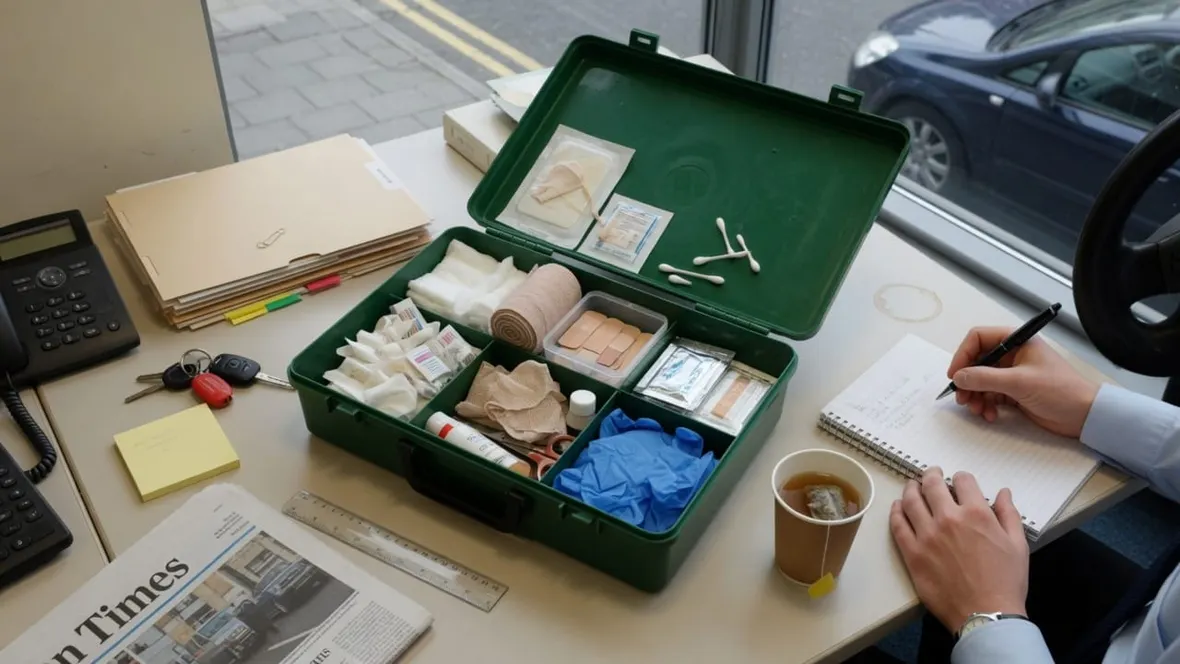
Quick answer: The Health and Safety (First-Aid) Regulations 1981 require every employer (even with one employee) to make adequate first-aid provision, based on an assessment of needs. No form is prescribed and the assessment doesn’t legally have to be written, but HSE guidance expects you to be able to show your reasoning, so in practice: write it down. Record the assessment, your first aiders and their certificate dates, kit checks, and treatments given.
What the needs assessment covers
- Hazards: what could realistically injure people here? (An office and a joinery answer differently.)
- Workforce: how many people, what shifts, lone workers, young workers, known medical conditions.
- Layout & location: multiple floors or buildings, distance from emergency care, travelling and remote workers.
- Provision decided: how many first aiders (FAW or EFAW trained), appointed persons for smaller/low-risk sites, kit contents and locations, eye-wash, defibrillator.
The records worth keeping
| Record | Why |
|---|---|
| The needs assessment itself, dated & signed | Your evidence of compliance; review after any significant change |
| First aiders + certificate expiry dates | FAW/EFAW certificates last 3 years, missed renewals are the classic failure |
| Monthly kit checks | Restocking proof; items expire |
| Treatments given | Feeds the accident book and flags recurring hazards |
How this connects to RIDDOR
First-aid treatment records are often the first evidence that an injury exists, and the trail that tells you when an over-3-day record or an over-7-day report is due. Keep the two systems pointing at each other.
FAQs
Is a first aider legally required?
Not always, low-risk small workplaces may need only an “appointed person” to take charge and call 999. Your assessment decides; that’s why it exists.
Do the 1981 Regulations cover the public/customers?
Strictly they cover employees, but HSE recommends including non-employees in your provision, and sectors like schools and leisure effectively must.
Related guides
- RIDDOR: what you must report, and when
- Free accident book template (PDF & Excel)
- Site accident books on construction projects
- COSHH assessment records
Sources
HSEFirst aid at work, official guidancelegislation.gov.ukHealth and Safety (First-Aid) Regulations 1981
Free download: our first aid kit check log template records contents, replacements and the earliest expiry date in each kit, which is the item most often found out of date.