V5C Red Flags: 8 Signs the Logbook Isn't Genuine
Eight red flags UK used-car buyers should check on a V5C before paying, watermarks, security features, VIN mismatch, and the DVLA verification tools.
 By Jamie Dawson · Editor
▮
Updated 21 Aug 2026
▮
5 min read
By Jamie Dawson · Editor
▮
Updated 21 Aug 2026
▮
5 min read
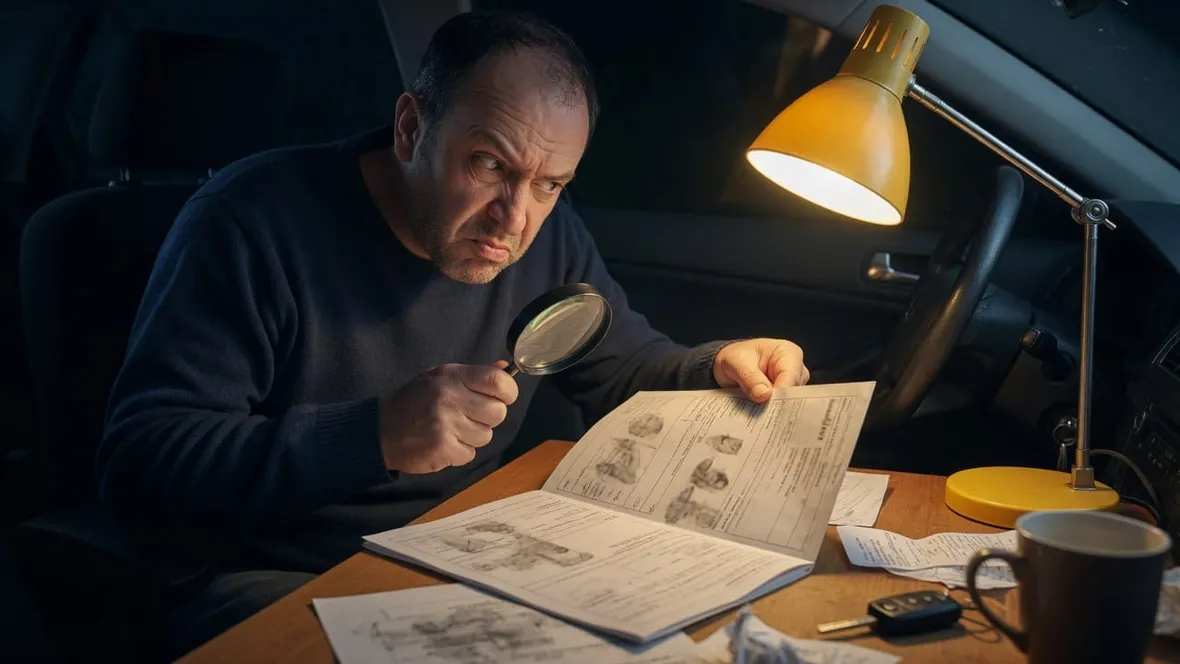
Every year, thousands of UK buyers unknowingly purchase stolen or cloned vehicles, often because they did not spot the warning signs in the V5C logbook before handing over their money. Knowing what to look for can save you thousands of pounds and months of legal headaches.
Here are eight red flags that should make you stop, ask questions, and think very carefully before proceeding with any used car purchase.
Why Fake V5C Documents Exist
A fraudulent V5C is not just a forgery. It is the foundation of vehicle crime. Criminals use fake or stolen logbooks to sell stolen cars as legitimate vehicles, to create false identities for written-off or cloned vehicles, and to obscure a vehicle's true history from unsuspecting buyers.
The DVLA estimates there are hundreds of thousands of stolen V5C documents in circulation at any one time. The physical document is the weak link in the vehicle ownership chain, which is precisely why knowing how to verify one is so important.
Red Flag 1. The Seller Does Not Have the V5C
This is the single biggest red flag of all. If a seller cannot produce the physical V5C at the point of viewing, do not buy the car.
Common excuses include: it is in the post from the DVLA, it was lost but a replacement has been applied for, the previous owner kept it, or it is at a different address. None of these are acceptable reasons to proceed. A genuine seller with a legitimate vehicle will always be able to produce the V5C.
The only narrow exception is a franchised dealer registering a brand new vehicle, and even then you should receive written documentation of the V5C status before completing any purchase.
Red Flag 2, The Document Does Not Feel Right
A genuine V5C has very specific physical characteristics that are difficult to replicate.
Hold the document up to a light source. You should see a continuous DVL watermark running throughout the paper. Run your fingertip over the printed text. Some areas have a slightly raised texture. The paper itself has a specific weight and texture: not too thin, not too smooth, not glossy.
A document that feels flimsy, too smooth, too thick, or printed on what feels like standard printer paper is suspicious. Trust your instincts. If something feels off about the physical document, take it seriously.
Red Flag 3. No Watermark or Incorrect Watermark
The DVL watermark is one of the primary security features of a genuine V5C. It runs continuously through the paper and should be clearly visible when held up to light.
If you cannot see a watermark, or if the watermark appears incomplete, patchy, or different in any way from what you would expect, the document may be a forgery. Do not proceed without independently verifying the document's authenticity.
Red Flag 4, The V5C Details Do Not Match the Vehicle
Every detail on the V5C should match the car you are viewing exactly. Work through each one systematically.
The registration number on the V5C must match the number plates. The VIN on the V5C must match the VIN stamped on the car. Check under the bonnet and on the door pillar. The make, model, colour, and engine size must all correspond to the vehicle in front of you.
Any discrepancy (however minor) is a serious red flag. Criminals creating fake identities for stolen vehicles sometimes make small errors. If anything does not match, stop immediately.
Red Flag 5. The Seller Is Not the Registered Keeper
The name printed on the V5C is the registered keeper. The person selling the car should be that person. If they are not, you need a very clear and verifiable explanation before proceeding.
Ask for photo ID (a driving licence or passport) and confirm the name matches the V5C. Always view the car at the address shown on the V5C. If the seller insists on meeting in a neutral location, this is a significant red flag.
Red Flag 6, The V5C Was Recently Issued on an Old Car
Every V5C shows the date it was issued. A recently issued V5C on a vehicle with several years of history is not automatically suspicious, logbooks do get lost and replaced legitimately. However, combined with other concerns, a very recent issue date on an older car should prompt questions.
Red Flag 7, Too Many Previous Keepers in a Short Time
The V5C records the number of previous registered keepers. A car that is three years old with five previous keepers suggests it has changed hands rapidly and repeatedly. On its own this is not proof of fraud, but combined with any other red flag it increases risk significantly.
Red Flag 8. The Seller Discourages a Vehicle History Check
A legitimate seller with a clean vehicle has nothing to fear from a history check. Resistance to a history check is one of the clearest behavioural red flags in any used car sale.
What to Do If You Spot a Red Flag
If you identify any of the red flags above, the safest course of action is to walk away. You are under no obligation to complete any purchase, regardless of how far the conversation has progressed.
Read our full guide: How to Check a Car's Logbook Before You Buy
If you suspect the vehicle is stolen or the V5C is fraudulent, report it to the police via 101 or Action Fraud on 0300 123 2040. Do not confront the seller directly.
Always Run a History Check Regardless
Even if the V5C appears completely genuine and raises no concerns, a full vehicle history check should still be part of every used car purchase. The V5C cannot tell you about outstanding finance, insurance write-off status, reported theft, or mileage discrepancy. Only a dedicated history check covers all of these.
Frequently Asked Questions
How common are fake V5C documents in the UK?
The DVLA estimates hundreds of thousands of stolen V5C documents are in circulation at any time. Vehicle fraud costs UK consumers over £1 billion annually.
Can I verify a V5C without paying for a full history check?
You can check basic vehicle details for free at the DVLA vehicle enquiry service on gov.uk. This confirms registration data but does not cover finance, theft, or write-off status.
What should I do if I have already bought a car with a fake V5C?
Contact the police immediately on 101 and report the fraud to Action Fraud on 0300 123 2040. Also contact your bank if you paid by bank transfer.
Key Takeaways
The single biggest red flag is a seller who cannot produce the physical V5C. Check the physical document carefully, watermark, paper quality, raised text, and correct formatting. Every detail on the V5C must match the vehicle exactly. The seller should be the registered keeper named on the document. Always run a full vehicle history check regardless of how genuine the V5C appears.
Related reading: Full Service History vs Partial: Does It Really Matter? | What Is an HPI Check and Do You Need One? | How to Spot a Clocked Car in the UK
🔍 Free tool: cross-check the car itself with our MOT history + mileage timeline checker.