Pay-Per-Mile From 2028: Your Odometer Reading Becomes Part of the Tax Record
HM Treasury confirmed eVED on 13 July 2026: 3p a mile for EVs, 1.5p for PHEVs from April 2028, MOT reconciliation, new odometer offences, and the records every keeper should start now.
 By Jamie Dawson · Editor
▮
Updated 12 Oct 2026
▮
8 min read
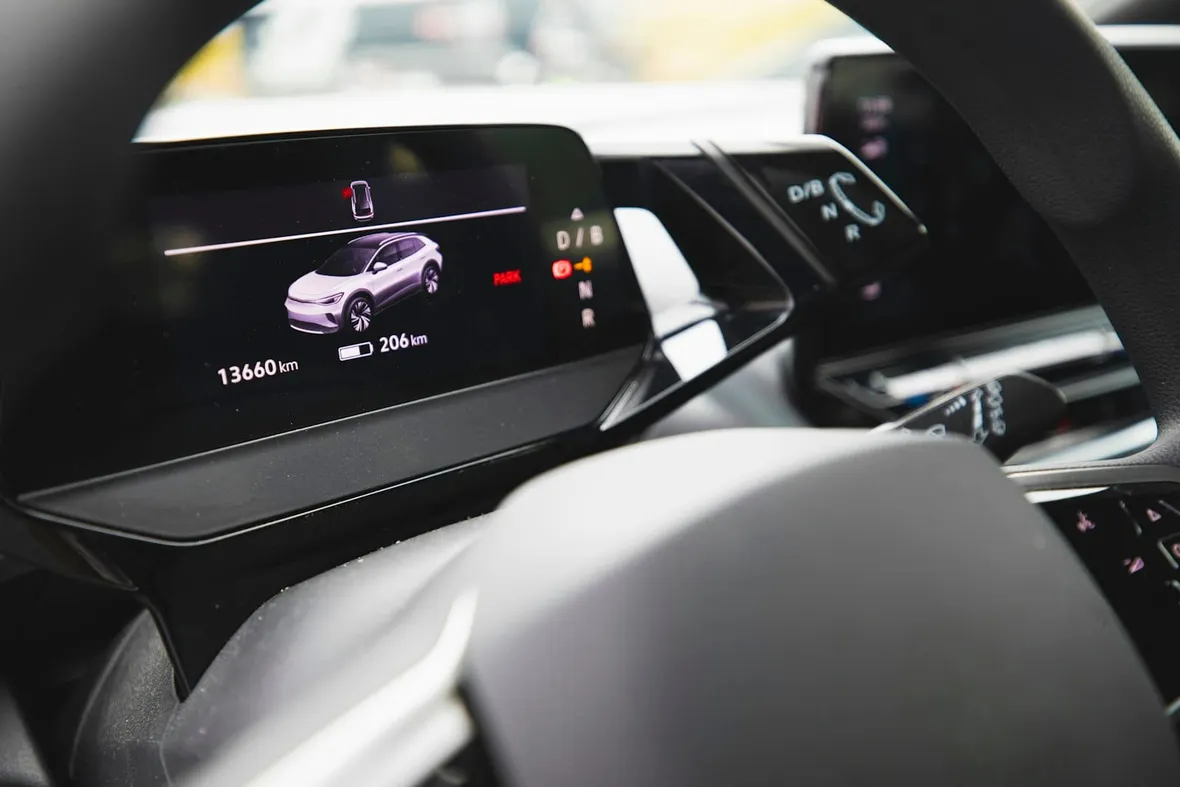
On 13 July 2026 HM Treasury published its response to the Electric Vehicle Excise Duty (eVED) consultation, with draft Finance Bill clauses. From 1 April 2028 the registered keeper of every electric or plug-in hybrid car will give DVLA an odometer reading and a mileage estimate each time the car is taxed. The reading will be reconciled against the verified figure recorded at the MOT, and the draft law makes a working odometer a legal requirement, with new offences for altering one or supplying the kit to do it. For the first time, the number on your dashboard is a tax record.
What the government confirmed on 13 July 2026
The consultation ran from 26 November 2025 to 18 March 2026 and drew 5,133 responses, 92 per cent from individuals. The response confirms the design announced at Autumn Budget 2025 with two changes: no separate mileage checks for cars too young for an MOT, and a simplified regime for fleets. Everything else survived.
| Item | Confirmed position |
|---|---|
| Start date | Vehicle licences taken out on or after 1 April 2028 |
| Battery electric car | 3p per mile |
| Plug-in hybrid car | 1.5p per mile |
| Hydrogen fuel cell car | 3p per mile (EV rate) |
| Range extender car | 1.5p per mile (PHEV rate) |
| Uprating | In line with CPI inflation from 2029-30 and each year after |
| Payment options | Annual, six-monthly or monthly, through the same channels as VED (online or Post Office) |
| Surcharges in the draft clauses | Six-month licence: 110 per cent of the eVED charge. Direct debit instalments: 105 per cent |
HM Treasury's worked example: a keeper who estimates 5,000 miles pays 5,000 x 3p, or £150 for the year, £12.50 a month before the direct debit surcharge. eVED is charged on top of the existing annual VED rate, not instead of it.
Which cars are in scope, and which are not
All UK-registered electric and plug-in hybrid cars are in scope. Annex B lists the exclusions: vans, buses, coaches and HGVs; M1SP special purpose vehicles such as hearses and campervans; and petrol or diesel cars converted to electric. The draft clause defining an "eVED vehicle" fixes status at first registration and says it "is not affected by any subsequent modification", so a classic converted under DVLA's 2025 modification rules stays outside eVED and a factory EV cannot be taken out of it by altering the car.
The annual cycle: reading, estimate, reconciliation
eVED runs through the existing VED renewal. At each renewal the keeper supplies an up-to-date odometer reading and an estimate of mileage for the year ahead. DVLA calculates an estimated liability, paid up front or spread across the year. At the end of the licence period the new reading is reconciled against the old estimate. Where the car has had an MOT, "a verified odometer reading will be taken, which can be reconciled with the mileage readings provided by the vehicle keeper". Any shortfall is paid as a balancing payment at the rate then in force.
Cars under three years old (four in Northern Ireland) have no annual MOT. The proposed separate mileage checks for them have been dropped. Keepers of new cars supply readings and estimates, "with reconciliation taking place against verified mileage data at the first MOT". DVLA also says it will run algorithms to check that entered readings keep rising as a car is used.
Top-ups, credits and refunds
If you expect to exceed your estimate you can top up during the year at the prevailing rate; in HM Treasury's example a keeper who revises 5,000 miles to 7,000 pays £60. If you drive less, the unused miles become a credit carried into the next licence period, re-rated if the per-mile rate has changed so it keeps its value in miles.
Cash refunds are narrow. At launch a refund is available only where the credit exceeds £100 and the keeper self-certifies an unforeseen change in financial circumstances and a risk of hardship. A stolen car, or an odometer destroyed in an accident, gets a default pro-rata refund. Automatic refunds on sale, scrapping or SORN will not be available at launch because DVLA's legacy systems cannot process them; further refund scenarios are promised by the end of 2026.
Selling or buying an eVED car
Three rules matter at the point of sale. Any pre-paid mileage credit transfers with the car, and the government "expects the value of the credit to be reflected in the sale price". A seller who has driven more than they paid for can settle the outgoing liability with a top-up before the transfer. And DVLA's Vehicle Enquiry Screen "will indicate if a vehicle is eligible to pay eVED and will show how much mileage has been paid", so a buyer can compare the paid-for figure with the odometer before handing over money.
The keeper change still runs through the V5C, whether transferred online or by post, and the seller still has to tell DVLA the car has gone. The sensible addition from 2028 is a dated odometer reading on the sale receipt, signed by both parties, with a photograph of the display. If the eVED record and the dashboard disagree later, that receipt fixes who drove which miles.
The checks that were dropped, and the powers that were kept
The pre-MOT mileage check was the most unpopular element of the original proposal; Transport + Energy reported the BVRLA's estimate that it would have cost the fleet sector around £260 million a year. The response drops it but keeps the back-stop: DVLA "will have the ability to require an official mileage check outside of the MOT cycle, including for vehicles less than three years old, where there is a reasonable suspicion of fraud or non-compliance".
It goes further. DVSA, DVLA and the police "will have the power to direct a registered keeper to take their vehicle to a specified location for an examination" where odometer fraud is suspected. The draft clauses (a new section 68A of the Road Traffic Act 1988) let a vehicle examiner or authorised constable enter premises where the car is kept, inspect, test, detain and drive it, and require the keeper to move it to a place of inspection and remain with it. Obstruction is an offence. A new section 69ZA allows a prohibition on driving a car with a faulty or tampered odometer until it is put right.
There is also an anti-forestalling clause: where more than 12 months of licences are taken out for an eVED car between 1 April 2027 and 31 March 2028 and one is still running on 1 April 2028, DVLA may issue a payment notice of £20 a month (EV) or £10 a month (PHEV) for each complete month after that date.
Fleets, leasing and rental
Fleets may submit estimated mileage per vehicle, normally the contracted allowance or the fleet average for rental, instead of actual readings. Bulk licensing will run through an API or web interface with aggregate payment on a fixed frequency. An operator can clear outstanding liability with a top-up before disposal; full reconciliation at disposal is promised for later. An opt-in connected-car reporting route is being explored, without location tracking. If you already keep a daily walkaround logbook, adding the odometer reading to each entry gives you a continuous mileage series that a contracted allowance does not.
A working odometer becomes the law
Paragraph 8.9 of the response says the government "plans to introduce a legal requirement for a vehicle to have a functioning odometer", with offences for supplying or installing tampering devices, and that this "will mean some simple checks being made at MOT". The draft schedule puts the detail in a new section 41E of the Road Traffic Act 1988. A person commits an offence if they:
- contravene a construction and use requirement for a relevant odometer, or use a car on a road that does not comply (fine up to level 4, currently £2,500);
- change, or procure the change of, a record made by a relevant odometer "without a good reason" (level 4 for an individual, level 5 otherwise);
- possess, advertise, supply or install a "tampering product", defined as a product or software one of whose main purposes is to alter the odometer record (level 5).
A new section 44A lets the Secretary of State make regulations requiring a "required mileage record", make failure to provide one a fine-only offence or a ground for the licence to lapse, and treat the record as conclusive evidence of the miles driven. These offences are defined by reference to eVED vehicles and commence on a date to be set by regulations, so their start date is not yet fixed. Clocking a petrol or diesel car remains a matter for existing consumer and fraud law, covered in our clocking guide. The draft was published for technical consultation and could change; as of 12 October 2026 no enacted version exists.
What to start keeping now
The response accepts that disputes will happen. DVLA "will retain discretion to consider other evidence where available, including recent official mileage readings from MOT tests" when an odometer fails or a car is stolen, and the penalties, appeals and dispute process is still being finalised. The keeper who can show a dated sequence of readings is the keeper who wins the argument.
Records you must keep
- ✓Your V5C in your name, showing the date you became keeper. The first eVED reading will be matched to it.
- ✓A dated, time-stamped photograph of the odometer at every MOT, service and tyre change, and on the day you buy or sell.
- ✓The full MOT history with the mileage at each test. Our free MOT history checker plots the series and flags readings that go backwards.
- ✓Service and repair invoices that state the mileage, including any cluster replacement and the mileage carried over.
- ✓Every eVED estimate, top-up receipt, refund application and reconciliation statement from DVLA.
- ✓The sale receipt with the odometer reading, date and both signatures, plus the V5C/2 or online transfer reference.
- ✓For fleets, the contracted mileage allowance per vehicle and the disposal reading.
Buyers should fold the eVED check into the usual used car document checks: V5C, MOT history, service history and, from 2028, the paid-mileage figure on DVLA's enquiry screen.
Frequently asked questions
Does eVED replace vehicle tax for electric cars?
No. The draft clause amends the Vehicle Excise and Registration Act 1994 so that duty on an eVED vehicle is "the annual rate applicable to it, plus the eVED charge". A car otherwise exempt from VED but in scope of eVED pays the eVED charge only.
My EV is under three years old. Will I have to take it for a mileage check?
Not routinely. The separate pre-MOT check has been dropped. You give a reading and an estimate at each renewal and the figures are reconciled at the first MOT. DVLA can still require an official check where it reasonably suspects fraud or non-compliance.
What happens if my odometer stops working?
A default pro-rata calculation applies where an odometer is damaged beyond repair, and DVLA will consider other evidence such as recent MOT readings. The draft clauses add a ground for ending a licence where a required mileage record cannot be provided, and allow an examiner to prohibit driving a car with a faulty odometer. Get it repaired, keep the invoice, and photograph the display before and after.
Can I pre-pay a year of tax in March 2028 to avoid the first year of eVED?
No. The anti-forestalling clause above allows DVLA to issue a monthly payment notice for any licence period running past 1 April 2028 where more than 12 months were bought in the preceding year.